CASE STUDY
Former Fishers in Crisis
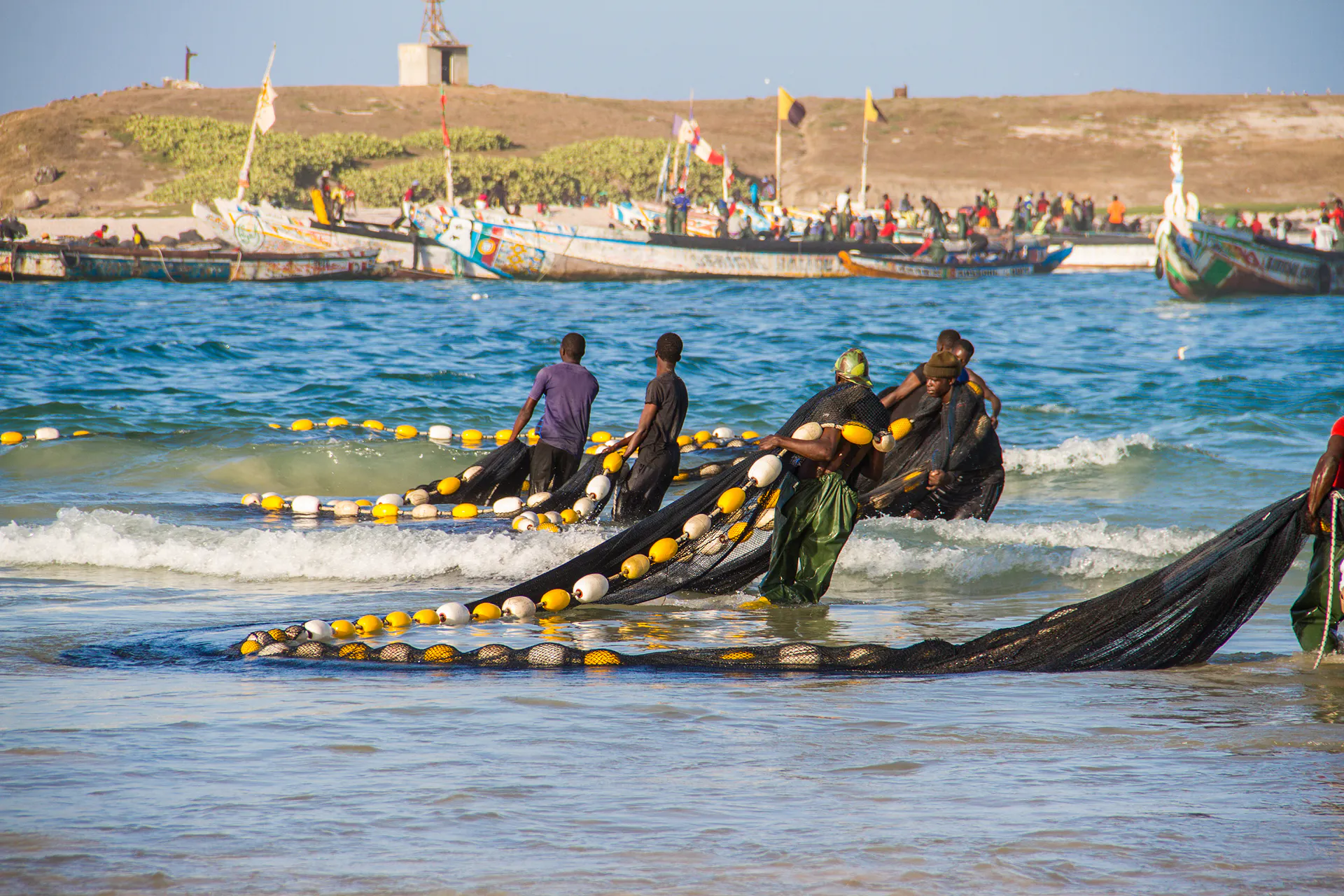
In Senegal, destructive overfishing, primarily from European and Chinese industrial fleets, has severely depleted local waters, upending coastal food security and contributing to the deadly mass migration of tens of thousands.
Small-scale fisheries are essential to Senegal’s economy, generating 44% of the national value added and employing as many as 169,000 people — more than 3% of the country’s workforce.
But the majority of fish populations have collapsed, as foreign-owned industrial trawlers deplete marine life and foreign-controlled vessels operate in the shadows.
As they outcompete local fishers, these boats are routinely engaged in illegal fishing activities, included but not limited to: using nets with an illegal mesh size, trespassing into the zone reserved for artisanal fishers, fraudulently under-reporting tonnage, fishing without a licence, violent interference with artisanal vessels, and tampering with their own vessel positioning systems.
Add these infractions to a marine environment already assailed by climate change and an economy plagued by the rising cost of fish and other goods, and Senegal’s artisanal fishers face a difficult decision: continue to catch less and less in waters dominated by industrial intruders, or abandon their livelihoods and country in pursuit of a chance of financial security abroad?