
CHARTING THE COURSE FOR TRANSPARENT SEAS
Nations are uniting behind bold commitments to advance fisheries transparency and lead the global fight against illegal, unreported and unregulated fishing.

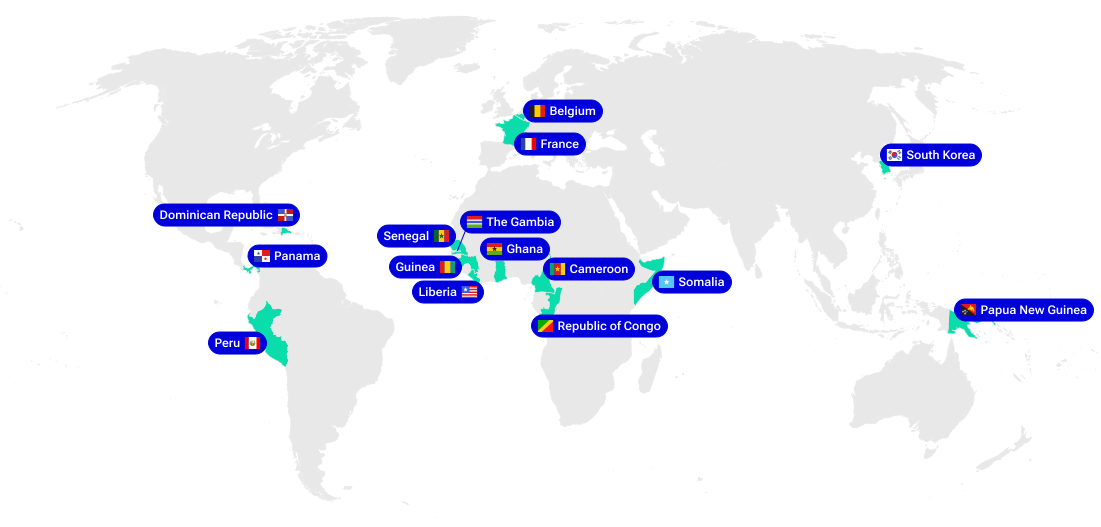

are championing the Mombasa Declaration, committing transparency as outlined in the Global Charter for Fisheries Transparency.
Will your nation join them?

Launched at one of the world’s oldest trading ports by nations that believe the rules of the ocean economy should be written by the people who depend on it
The Mombasa Declaration was launched at the 2026 Our Ocean Conference in the Republic of Kenya, marking a new era of transparent, accountable, and fair fishing. Adopted by countries across Africa, Asia, the Caribbean, Europe, and the Pacific, this call to action builds on international efforts to move past a status quo of opaque industrial practices — hidden vessel ownership, unregulated fleets, unreported catches, labour abuses, and untraceable supply chains — that fuel illegal fishing and the depletion of fish populations that coastal communities depend on.
Transparency is the foundation of a fair and prosperous blue economy.

CHAMPIONS OF FAIR FISHING

Hon. Emelia Arthur Minister for Fisheries and Aquaculture Development, Ghana
“In my country, our very existence depends on fish. Sixty percent of our animal protein comes from fish, and ten percent of our population depends on the fisheries value chain for livelihood. Fisheries are a matter of culture and national security for us.
I'm happy that Ghana is among the first countries to sign the Mombasa Declaration, because it provides a platform for all of us, the different governments, to come together and declare on an international platform that we are working together, fighting together for transparency in the fisheries sector.”
Madame Catherine Chabaud Minister Delegate for the Sea and Fishery, France
“France is proud to be among the first supporters of the Mombasa Declaration on Fisheries Transparency, through its Overseas Countries and Territories (OCTs). This initiative is based on a simple conviction: we will not be able to effectively combat IUU fishing without greater transparency and international cooperation.
The Declaration provides an important opportunity for governments to demonstrate their political commitment to improving fisheries governance. We hope that many more countries will join this initiative and implement the commitments it promotes, making transparency the norm in the fisheries sector.”

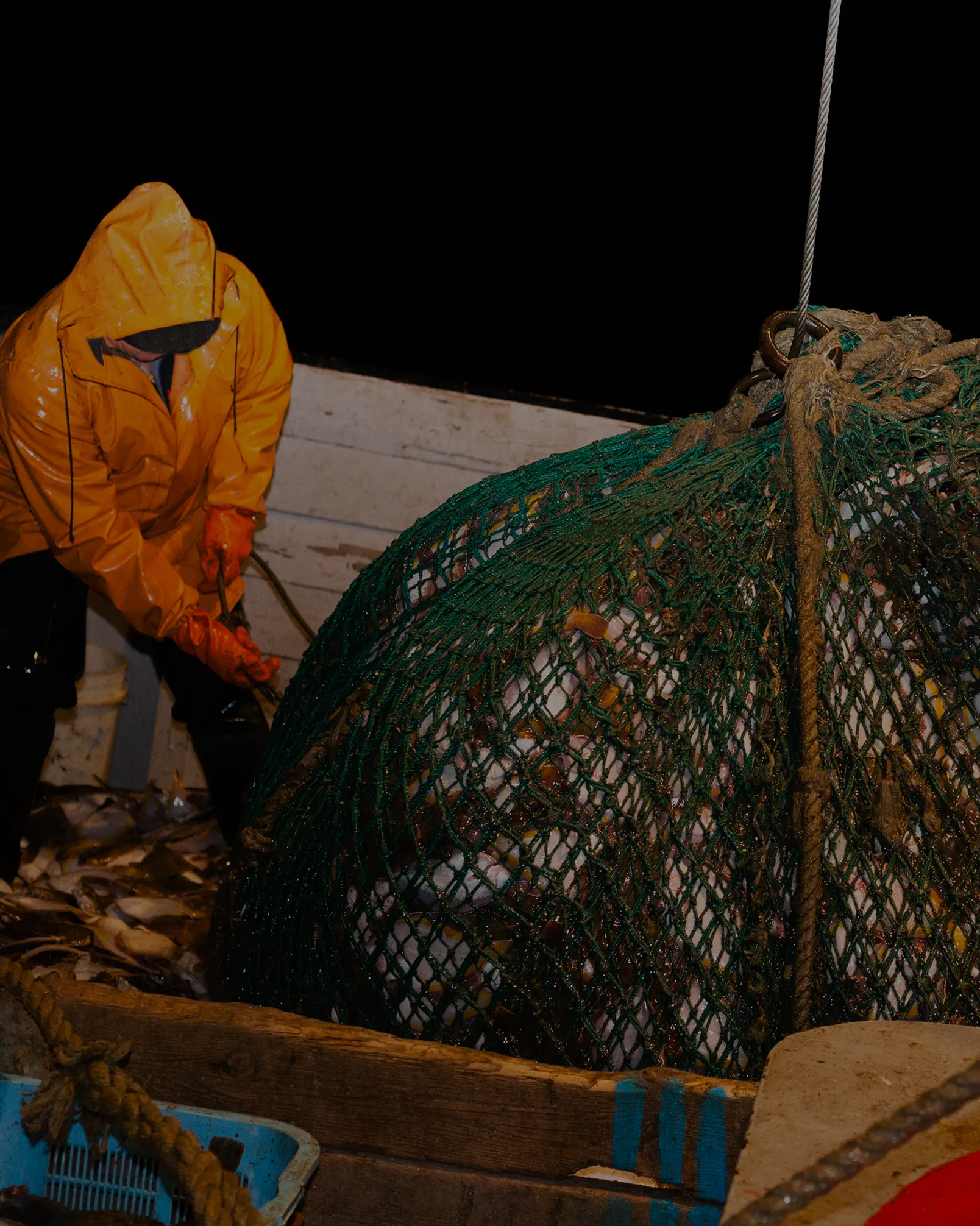
ILLEGAL, UNREPORTED, AND UNREGULATED FISHING ACCOUNTS FOR 20% OF THE WORLD'S CATCH.
WHAT WE’RE MOVING BEYOND
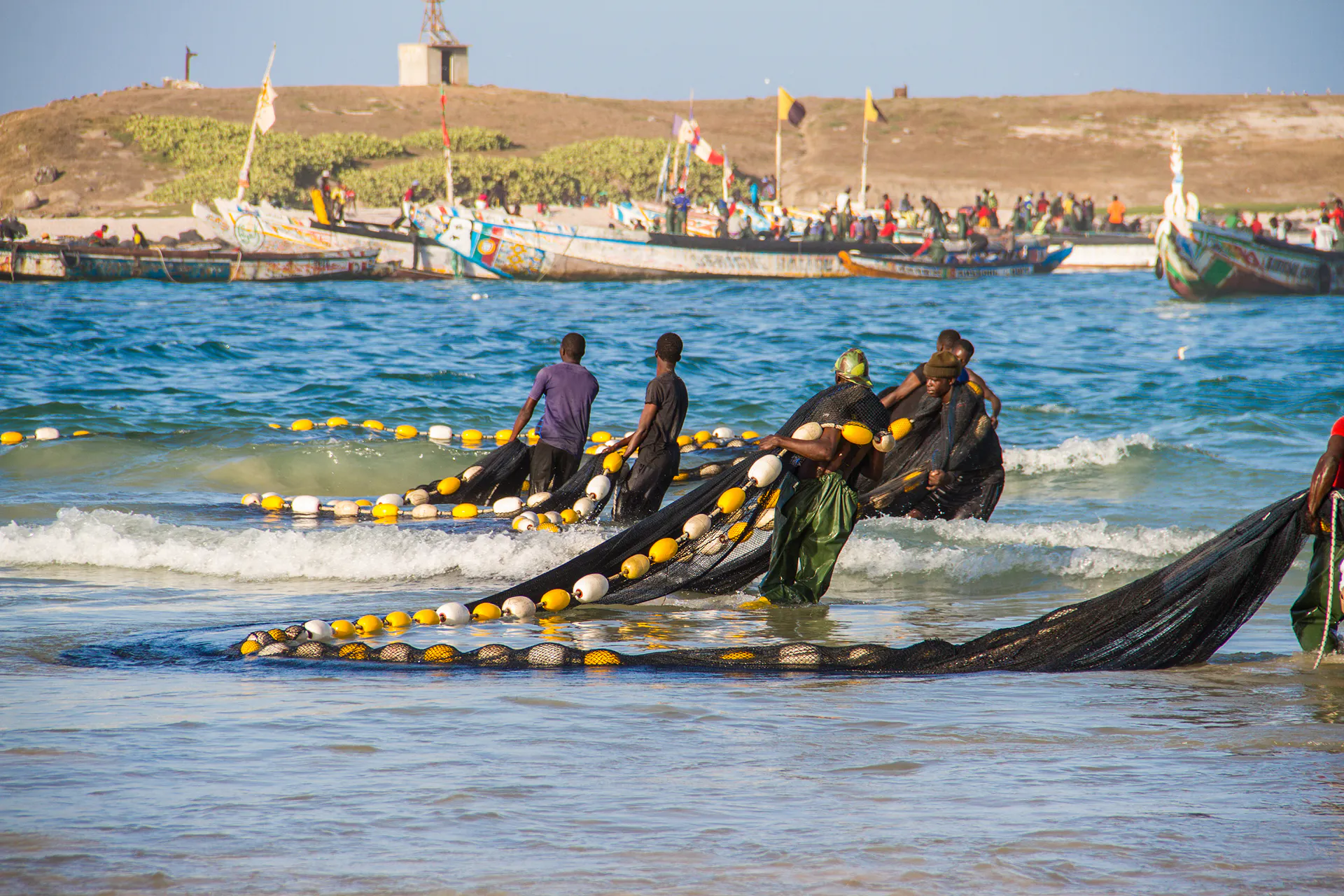
Former Fishers in Crisis
In Senegal, destructive overfishing, primarily from European and Chinese industrial fleets, has severely depleted local waters, upending coastal food security and contributing to the deadly mass migration of tens of thousands.
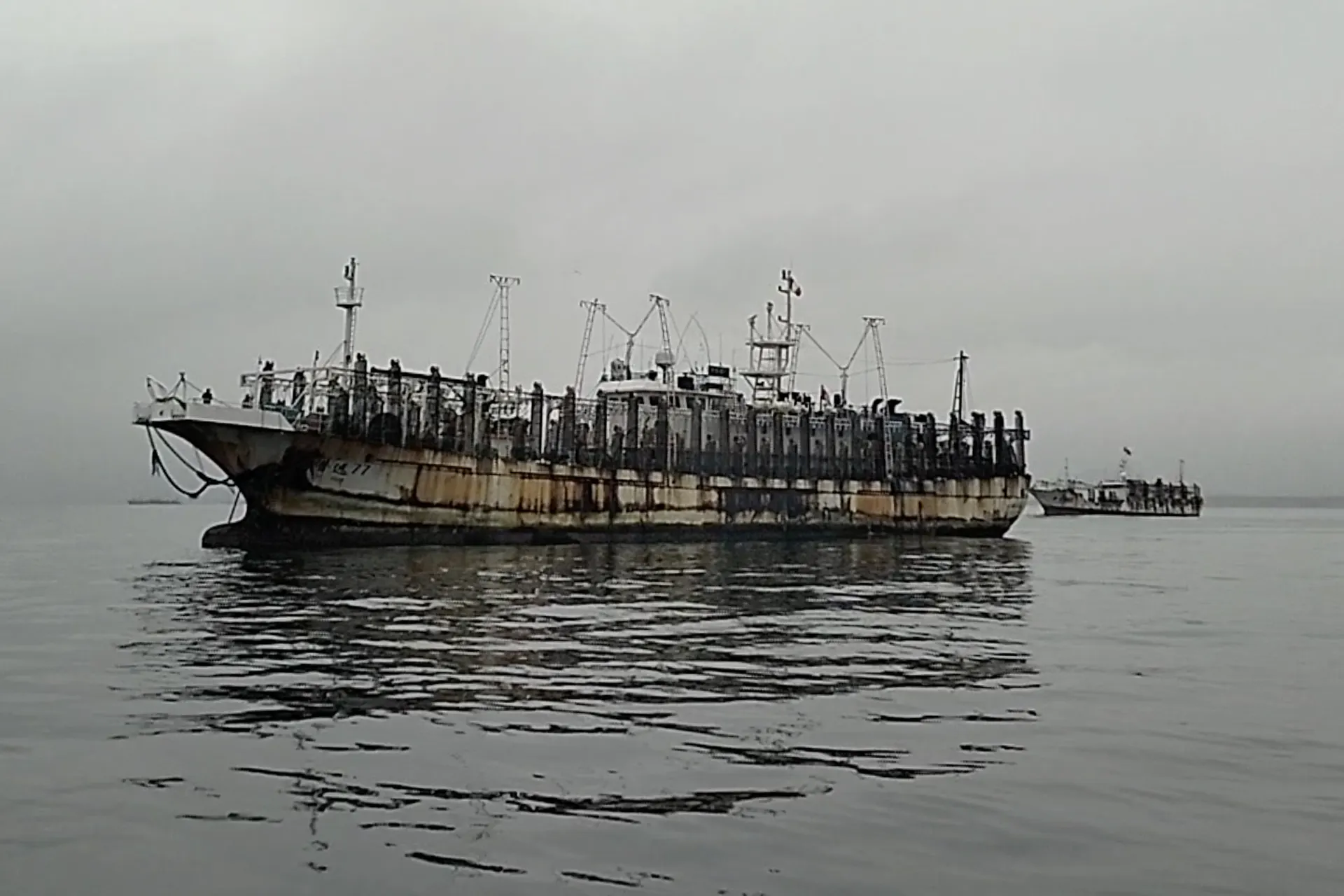
Plundering the Southeast Pacific
Beyond the exclusive economic zone (EEZ) of Peru, mostly Chinese fleets fish for squid under cover of darkness. Unseen and unaccountable, they’ve been implicated in major governance failures, environmental exploitation, and human rights abuses in the world’s most important squid fishery.

WHAT WE’RE MOVING TOWARD
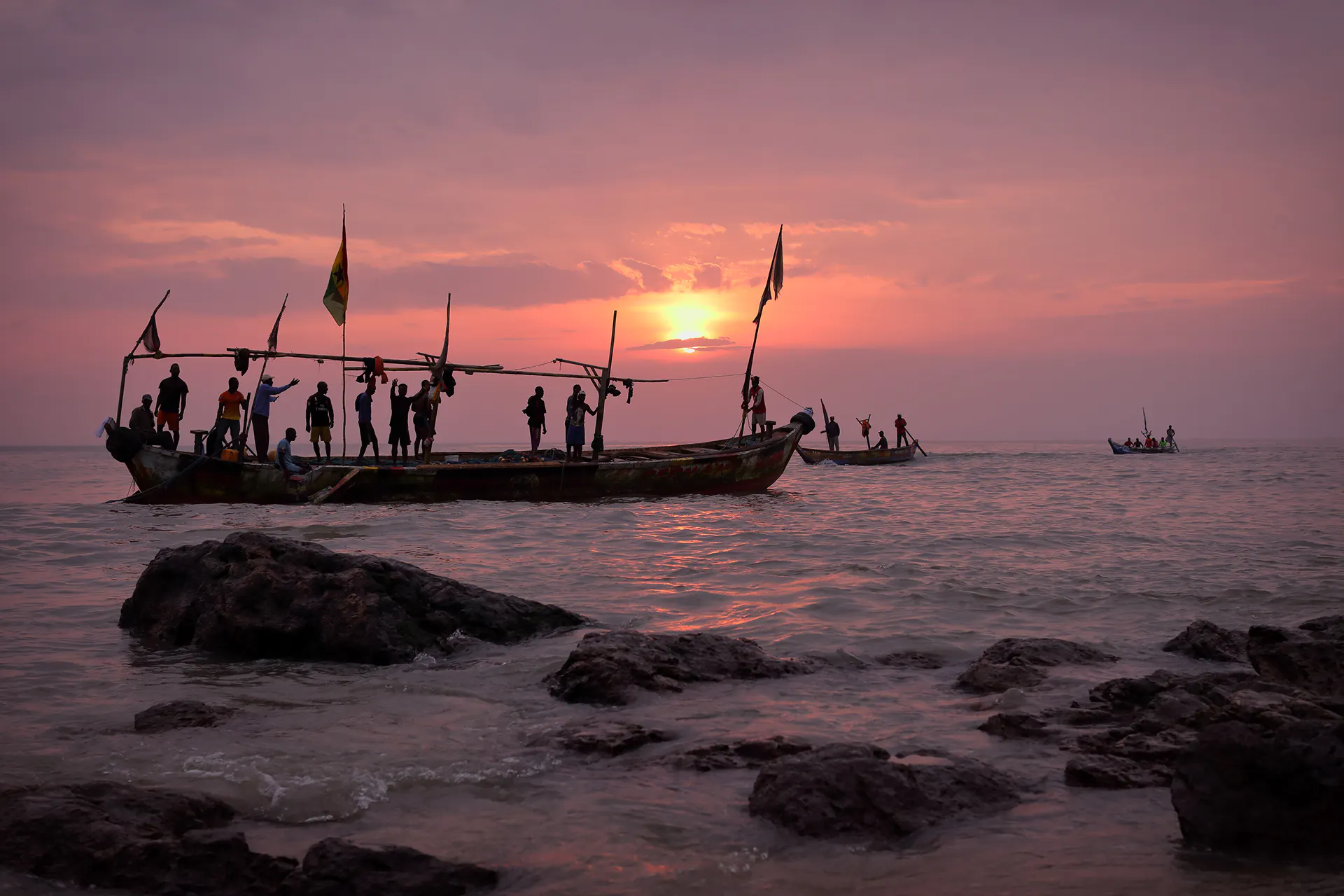
Ghana Sets Sail for Transparency
Ghana was the first country to formally sign the Mombasa Declaration, as the nation continues to implement its Fisheries and Aquaculture Act. Enacted in 2025, this new transparency law was designed to support artisanal fishers and counteract a near-collapse of pelagic fisheries as a result of industrial trawling operations, known locally as saiko.
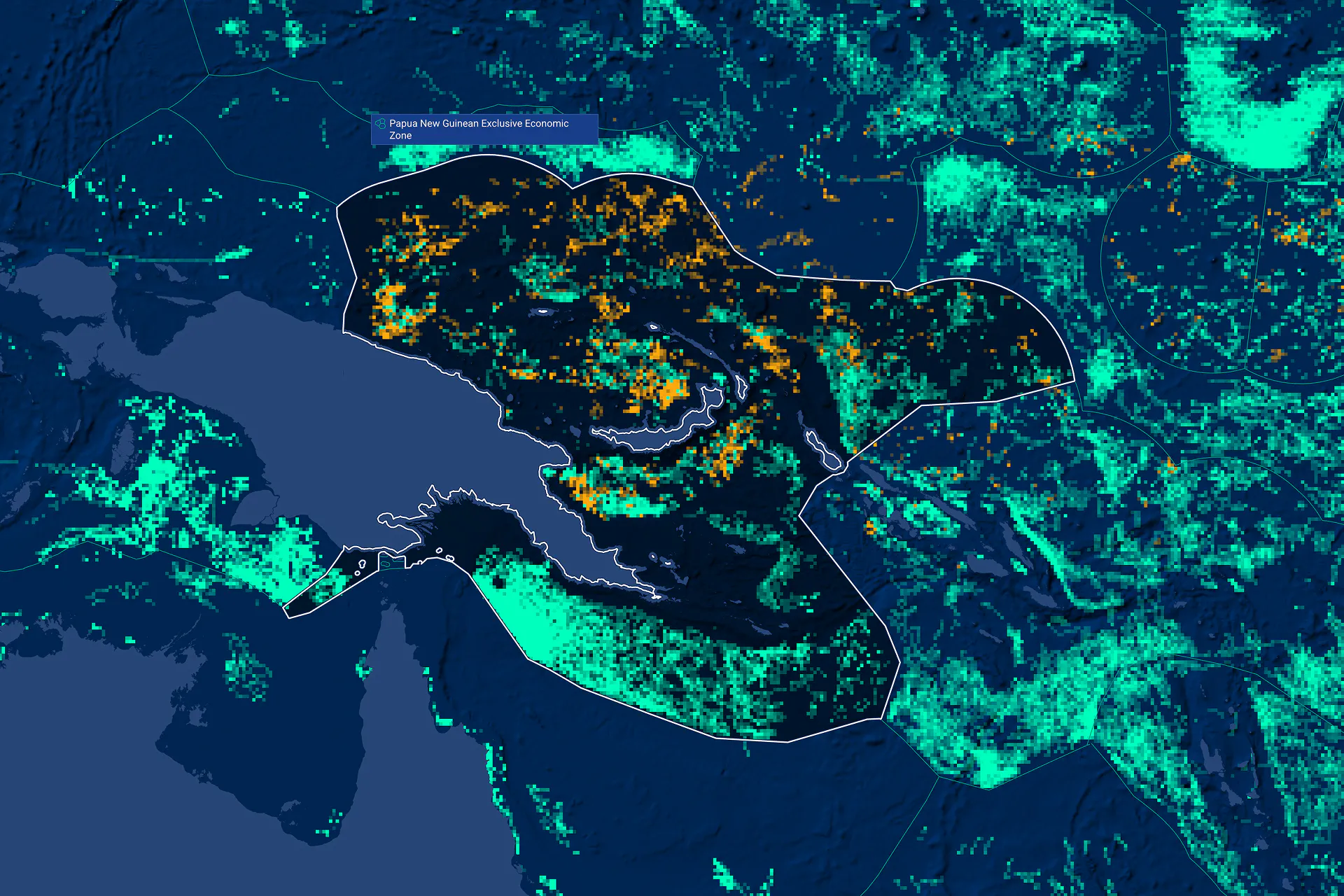
Building Systems for Cutting-edge Protection
Sometimes progress is best measured in decades, not years. Since 2012, the Fishing Industry Association of Papua New Guinea has made consistent, structural improvements in crew welfare and fleet transparency year over year.
GUIDED BY THE GLOBAL CHARTER
The Mombasa Declaration embraces the principles set forth in the Global Charter for Fisheries Transparency, recognizing transparency as a cornerstone for legal, sustainable and ethical fisheries management worldwide.

Vessel information
Know which boats are fishing, who is authorised to fish, who really owns the vessels, and stamp out flags of convenience that let bad actors hide.

Fishing activity
Track where vessels go, stop unmonitored transfers of fish at sea, and make sure every catch is legal and traceable from boat to plate.

Governance and management
Ratify international safety and labour standards, open up fisheries data and decision-making to affected communities, and protect the workers on board.
THE COMMITMENTS

Transparency and Good Governance
Commit to advancing transparency and accountability policies across fisheries by:
Establishing or modernizing digital vessel registries and sharing data with the FAO Global Record of Fishing Vessels.
Publishing fishing licenses, authorizations, access agreements and quota allocations, as recommended by the FiTI Standard.
Ensuring that all industrial fishing vessels have unique vessel identifiers (UVIs), such as IMO numbers, and progressively implement UVIs for small-scale vessels.
Collecting information on the ultimate beneficial owners of vessels and fishing companies to effectively target and hold accountable those behind the violations.

Strengthening Monitoring and Enforcement Cooperation
We commit to enhancing monitoring, control, and surveillance (MCS), including via vessel tracking and more efficient information-sharing efforts, to more effectively prevent, deter, and eliminate illegal, unreported, and unregulated (IUU) fishing.
This includes improving flag State responsibility by tackling the use of flags of convenience.
Further, States should fully implement port State measures including data sharing via the system of the Port State Measures Agreement (PSMA), and collaborate with regional and international partners to close governance and enforcement gaps.

Capacity Building and Support for Implementation
We call for strengthened capacity building, technical and other assistance to enable States to implement transparency reforms. This includes support for
digitizing registries
enhancing data management system
improving MCS capabilities
and expanding professional development within fisheries authorities.

Ocean Observation and Open Data
We commit to strengthening ocean observation systems and promoting open-access data to inform not only efforts to combat IUU fishing, but also broader fisheries management, marine spatial planning, climate adaptation and maritime security.

SIGN-UP
Get the latest news and updates on sustainable fisheries governance, the Mombasa Declaration, and the path toward a fairer global fisheries industry.
Below are tests with 2 col instead of content grids
are championing the Mombasa Declaration, committing transparency as outlined in the Global Charter for Fisheries Transparency.
Will your nation join them?
Former Fishers in Crisis
In Senegal, destructive overfishing, primarily from European and Chinese industrial fleets, has severely depleted local waters, upending coastal food security and contributing to the deadly mass migration of tens of thousands.
Plundering the Southeast Pacific
Beyond the exclusive economic zone (EEZ) of Peru, mostly Chinese fleets fish for squid under cover of darkness. Unseen and unaccountable, they’ve been implicated in major governance failures, environmental exploitation, and human rights abuses in the world’s most important squid fishery.
Ghana Sets Sail for Transparency
Ghana was the first country to formally sign the Mombasa Declaration, as the nation continues to implement its Fisheries and Aquaculture Act. Enacted in 2025, this new transparency law was designed to support artisanal fishers and counteract a near-collapse of pelagic fisheries as a result of industrial trawling operations, known locally as saiko.
Building Systems for Cutting-edge Protection
Sometimes progress is best measured in decades, not years. Since 2012, the Fishing Industry Association of Papua New Guinea has made consistent, structural improvements in crew welfare and fleet transparency year over year.
THE COMMITMENTS
Transparency and Good Governance
Commit to advancing transparency and accountability policies across fisheries by:
Establishing or modernizing digital vessel registries and sharing data with the FAO Global Record of Fishing Vessels.
Publishing fishing licenses, authorizations, access agreements and quota allocations, as recommended by the FiTI Standard.
Ensuring that all industrial fishing vessels have unique vessel identifiers (UVIs), such as IMO numbers, and progressively implement UVIs for small-scale vessels.
Collecting information on the ultimate beneficial owners of vessels and fishing companies to effectively target and hold accountable those behind the violations.
Strengthening Monitoring and Enforcement Cooperation
We commit to enhancing monitoring, control, and surveillance (MCS), including via vessel tracking and more efficient information-sharing efforts, to more effectively prevent, deter, and eliminate illegal, unreported, and unregulated (IUU) fishing.
This includes improving flag State responsibility by tackling the use of flags of convenience.
Further, States should fully implement port State measures including data sharing via the system of the Port State Measures Agreement (PSMA), and collaborate with regional and international partners to close governance and enforcement gaps.
Capacity Building and Support for Implementation
We call for strengthened capacity building, technical and other assistance to enable States to implement transparency reforms. This includes support for
digitizing registries
enhancing data management system
improving MCS capabilities
and expanding professional development within fisheries authorities.
Ocean Observation and Open Data
We commit to strengthening ocean observation systems and promoting open-access data to inform not only efforts to combat IUU fishing, but also broader fisheries management, marine spatial planning, climate adaptation and maritime security.
CHAMPIONS OF FAIR FISHING