CASE STUDY
Ghana Sets Sail for Transparency
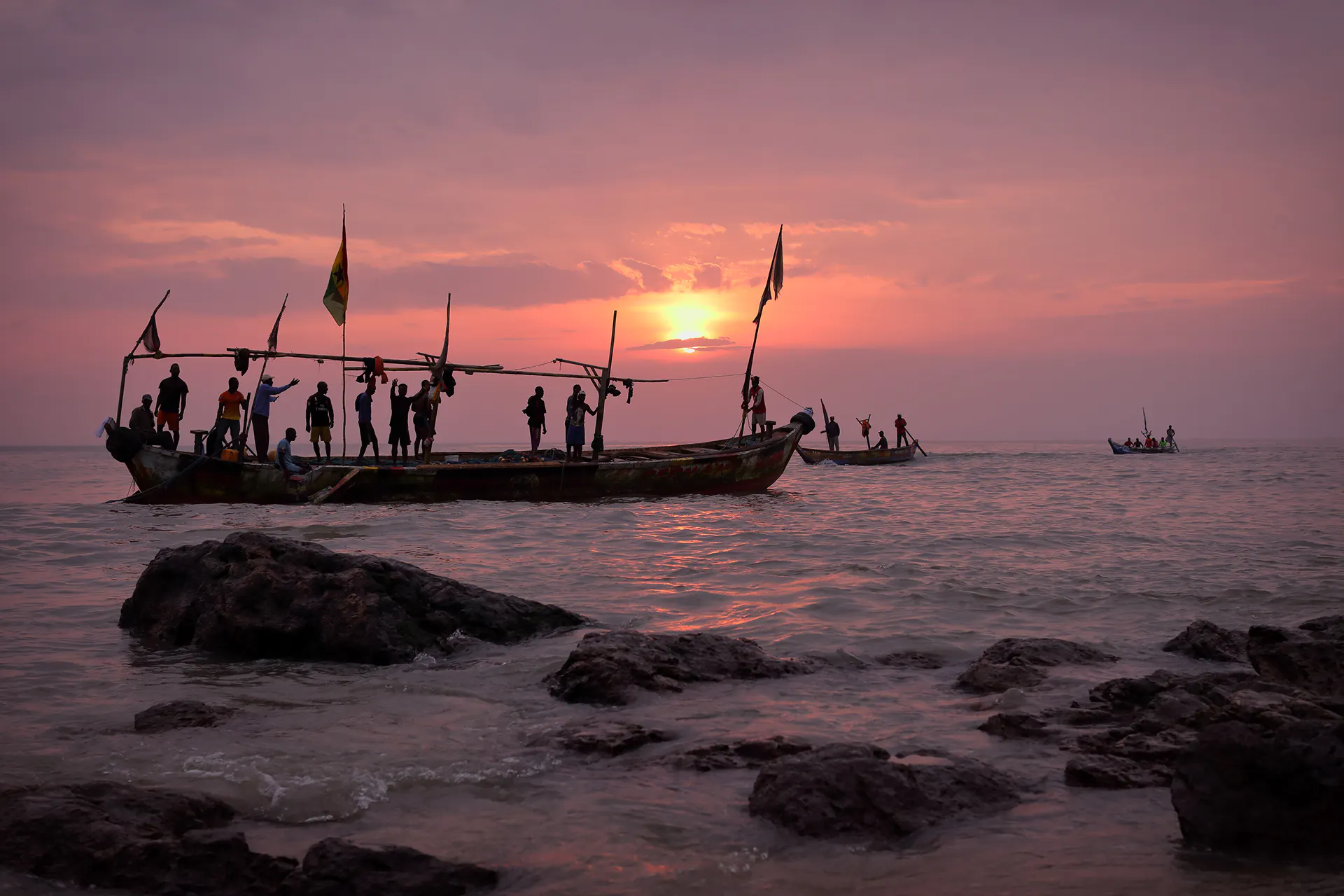
Ghana was the first country to formally sign the Mombasa Declaration, as the nation continues to implement its Fisheries and Aquaculture Act. Enacted in 2025, this new transparency law was designed to support artisanal fishers and counteract a near-collapse of pelagic fisheries as a result of industrial trawling operations, known locally as saiko.
By expanding the country’s inshore exclusion zone, setting stricter fines and penalties, and establishing new monitoring and enforcement mechanisms, fisheries minister Hon. Emillia Arthur is taking a stand against illegal fishing. And she’s not alone. New partnerships with the Food and Agriculture Organization, a new National Taskforce Team of experts and stakeholders across Ghana, and an improved national Fisheries Commission are working to better manage fisheries resources and develop a more sustainable model that other nations can follow.
Because Ghana’s fishers know what happens when the industry operates in the dark. Sardinella, “the people’s fish,” has collapsed by over 90% in recent decades. 90% of small-scale fishers have seen declining catch numbers. But as many as 3 million people across 200 coastal fishing communities rely on the sector, including 200,000 small-scale fishers and 500,000 fish processors and traders — and Ghanaian leadership is determined to take bold, comprehensive actions to right the ship.