Fellow scientists, please add your name in support of the below letter by filling in the form above. By signing, you are agreeing to your name appearing publicly on the final letter shared by Ocean Conservancy and Oceans North. Since important wins for science are beneficial to research anywhere, all scientists pursuing or holding advanced degrees in a scientific discipline are encouraged to sign.
Letter
Letter from Scientists concerning the Central Arctic Ocean
1,176 signatures. Let’s get to 2K
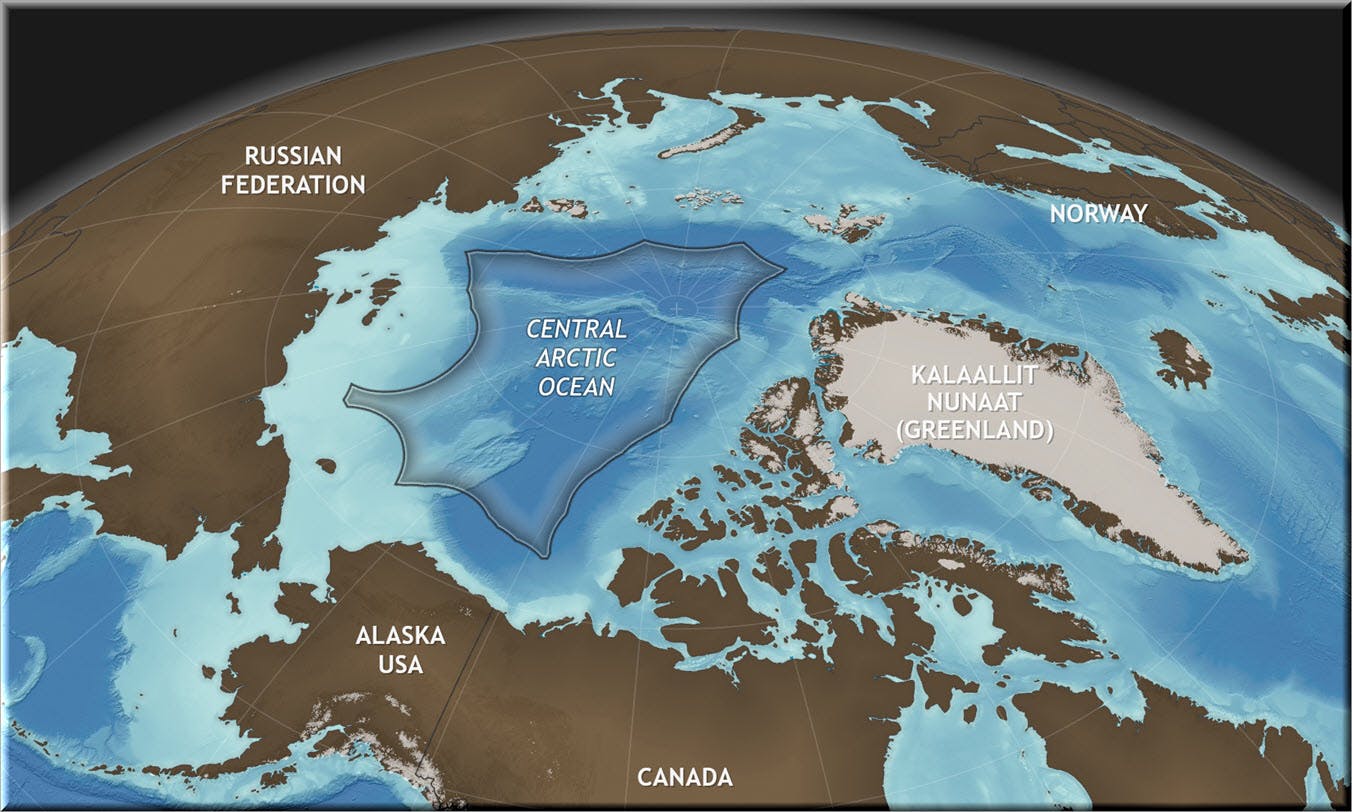
Source: Ocean Conservancy
In 2018, Canada, the European Union, Denmark/Greenland, Iceland, Japan, Norway, the Peoples Republic of China, the Republic of Korea, the Russian Federation, and the United States of America signed an agreement to prohibit commercial fishing in the high seas of the Central Arctic Ocean. This landmark achievement recognized the need to act with caution due to a lack of knowledge about the Arctic marine ecosystem. The agreement also set a new standard for international governance, recognizing a shared commitment amid a range of national interests.
Recently, in recognition of the ongoing need for robust information about the Central Arctic Ocean and its ecosystems, the ten Parties to the Central Arctic Ocean Fisheries Agreement adopted an implementation plan for a multi-year, multi-national research program to include both scientific and Indigenous knowledge. This program is designed to develop the knowledge necessary to make informed decisions in the future. By adopting this program, the Parties also reaffirmed this new standard for international governance and their shared commitment to evidence-based decision-making.
However, attention to the Arctic continues to grow and Arctic sea ice continues to retreat. Other types of industrial activity in the region are now being discussed, such as commercial shipping through the high seas, and deep-sea mining on extended continental shelves. These activities would disrupt Arctic ecosystems and societies, undermining the principles and practices of the Central Arctic Ocean Fisheries Agreement.
To sustain the aims of the Fisheries Agreement and to continue the commitment to effective governance based on a clear recognition of what we do and do not know, countries with an interest in the Arctic Ocean should again work together for an agreement pausing the start of all forms of industrial activity in the Central Arctic Ocean while cooperative research and appropriate governance systems can be developed. Such an agreement would be consistent with the principles of the Fisheries Agreement concerning substantive Indigenous involvement, caution when it comes to new activities, and collaborative approaches to research, monitoring, and data-sharing in the region.
In 2012, over 2,000 scientists from around the world first called on nations to protect the Central Arctic Ocean from the threat of premature and unregulated commercial fishing. Since then, research has further emphasized the importance of the Central Arctic Ocean and its connections to regional and global biota, ocean currents, wind patterns, and climate functions. It is time for the international community to again take action to recognize the importance of the Central Arctic Ocean for Arctic peoples and the globe.
We, the undersigned scientists, call on Arctic governments to take a lead in developing an international agreement that protects the CAO and its ecosystems, adopts a precautionary approach based on Indigenous and scientific knowledge that pauses new industrial activities in the CAO, and promotes international cooperation and collaboration for research, monitoring, data-sharing, and development of governance mechanisms appropriate for this crucially important international region.
The scientists who have signed this letter have done so in their personal capacities. Institutional affiliations are provided only for identification purposes, and do not imply any institutional position on Arctic issues.
Tom Barry, University of Akureyri, Iceland Jackie Dawson, University of Ottawa, Canada Allison Fong, Allison Fong Science, USA Shari Fox, Ittaq Heritage and Research Centre, Canada Grete Hovelsrud, Nordland Research Institute and Nord University, Norway Henry Huntington, Ocean Conservancy, USA Teunis Jansen, Greenland Institute of Natural Resources, Greenland, and Technical University of Denmark, Denmark Amanda Lynch, Brown University, USA Marc Macias-Fauria, Scott Polar Research Institute, University of Cambridge, UK Pan Min, Center for Polar and Ocean International Studies, School of Political and International Relations Tongji University, People’s Republic of China Sei-ichi Saitoh, Arctic Research Center, University of Hokkaido, Japan Romain Troublé, Fondation Tara Océan, France