
The Challenge:
Water access continues to be a challenge around the world, made even more challenging by the climate crisis. Nearly two-thirds of the world’s population faces severe water shortages for at least one month out of every year. Desalination is the fastest growing means of producing water but current processes are unsustainable, expensive, energy intensive and reliant on fossil fuels. One study found that 142 million m3 of desalinated brine is released into oceans every day — often directly into the marine environment — with an estimated 76 million tons of CO2 emitted annually as a result of desalination processes.
The Solution:
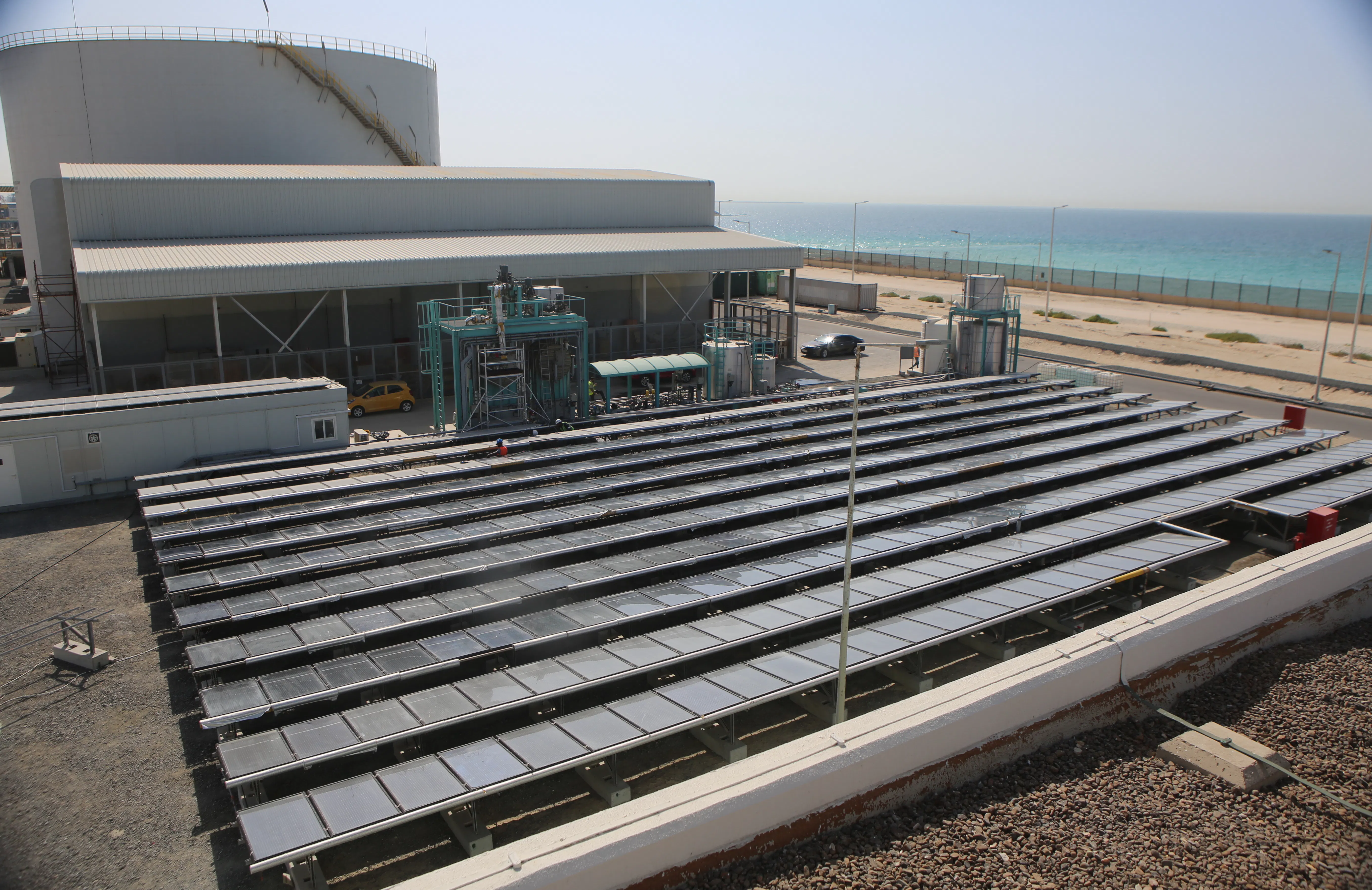
Enter Desolenator, the world’s first solar thermal desalination solution that works at scale. Desolenator’s technology harnesses the sun’s energy to turn seawater into purified water, providing reliable, sustainable, and affordable water to remote communities in need. Utilizing a photovoltaic-thermal technology that excels in solar energy capture and conversion, their technology channels four times more energy than the standard PV, can operate 24/7 off-grid, and has low maintenance requirements and operational costs, boasting a lifespan of over 20 years. Compared to conventional reverse osmosis, Desolenator generates a 1400% reduction in CO₂.
In 2022, Desolenator delivered its flagship plant for the Dubai Electricity and Water Authority (DEWA) as part of the Dubai Clean Energy Strategy 2050. Desolenator is currently scaling modular units — each producing 40,000 liters per hour at a levelized cost of water of less than $1 per 1,000 liters. Desolenator is also developing a Zero Liquid Discharge (ZLD) integration, which means no brine goes back into the ocean, but is turned into salt instead to be sold for industrial purposes.
Net-zero Water for Food Production:
Food security is a top national priority for governments around the world and is directly tied to water security and climate change. Together with leading UAE agriculture company Silal, Desolenator is deploying the world's first solar desalination plant for food production. This initiative will tap into seawater and brackish wells to produce high-quality water with zero harm to our ocean. In addition, Desolenator provides essential cooling capacity for greenhouse farming with net-zero footprint and offers tailored mineralization of the output water, ensuring optimal quality and yield for each crop. The project is set to be completed by COP28.
Support This Member:
Learn more about Desolenator on their website and follow them on LinkedIn.