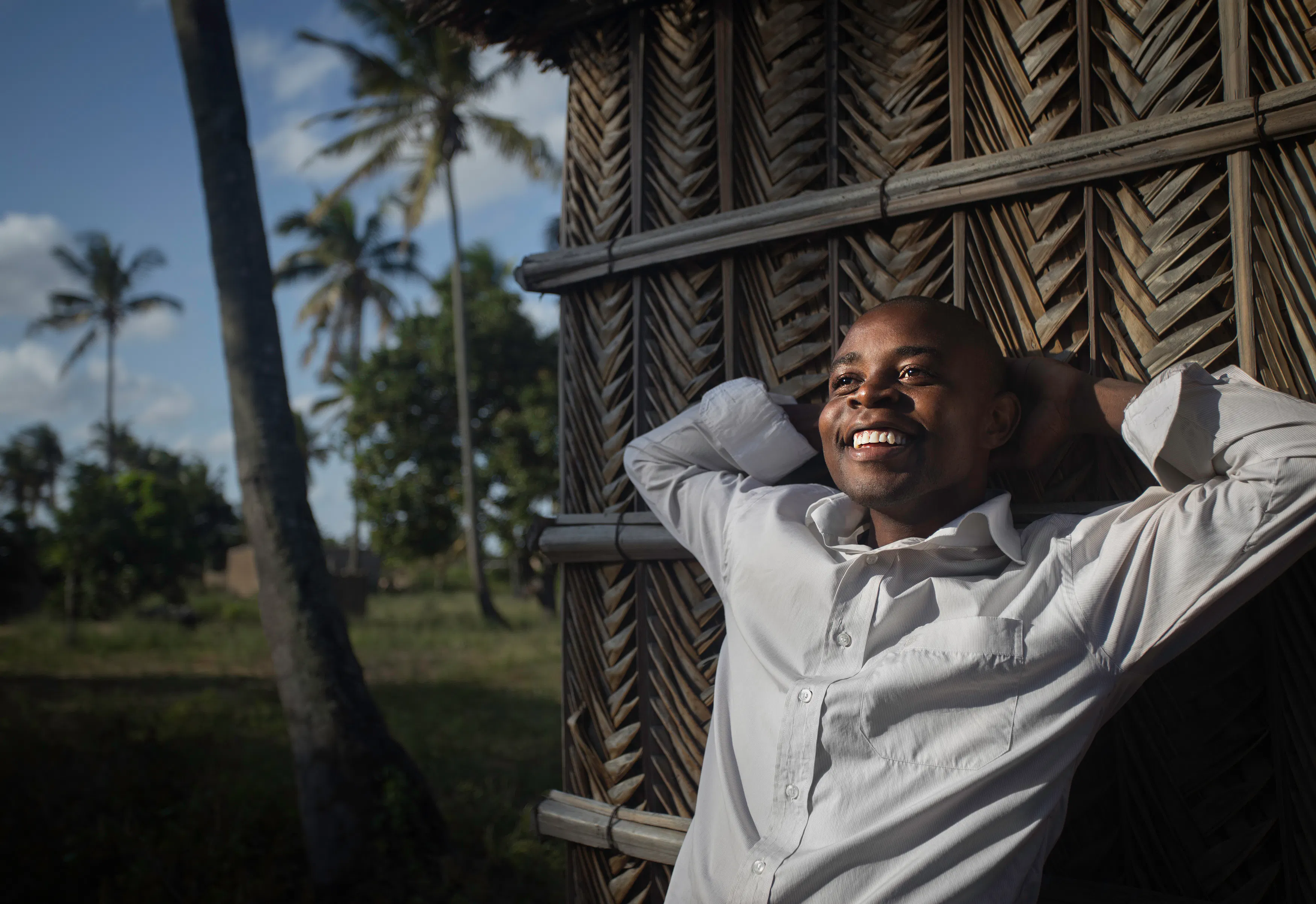
Pascoal Nhamussua is a local leader at Love The Oceans, a nonprofit based in Jangamo Bay, Mozambique. In February 2021, our incredible monthly donor community, The Tide, is supporting Love The Oceans’ kayak-powered sustainable fishing program, led by Pascoal.
Read on for Pascoal’s story and become a member of The Tide today to support ocean changemakers like Pascoal and projects like Love The Oceans.
Until recently 28-year-old Pascoal Nhamussua did not swim in the ocean. He didn’t know how. Despite growing up in one of Mozambique’s coastal villages, this was not unusual. Every year, accidental drownings took the lives of his friends and neighbors. Sometimes, they still do. Yet mastering his fear, Pascoal had no choice but to go out fishing to feed his family.
Today, Pascoal’s life could not look more different.
Now a local leader in the Jangamo-based conservation nonprofit Love The Oceans, he is getting to know the ocean from the inside. In his own words, he has transformed:
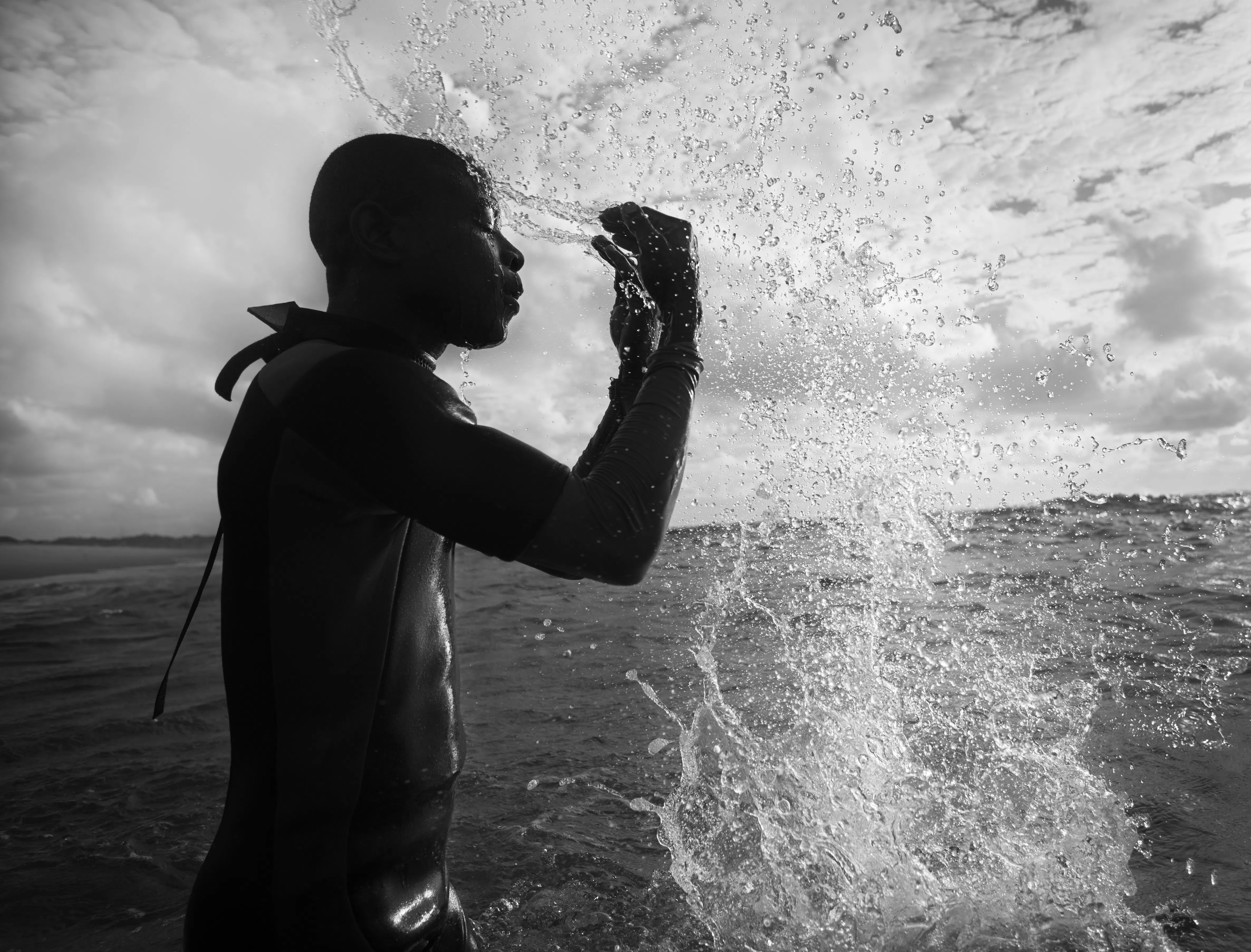
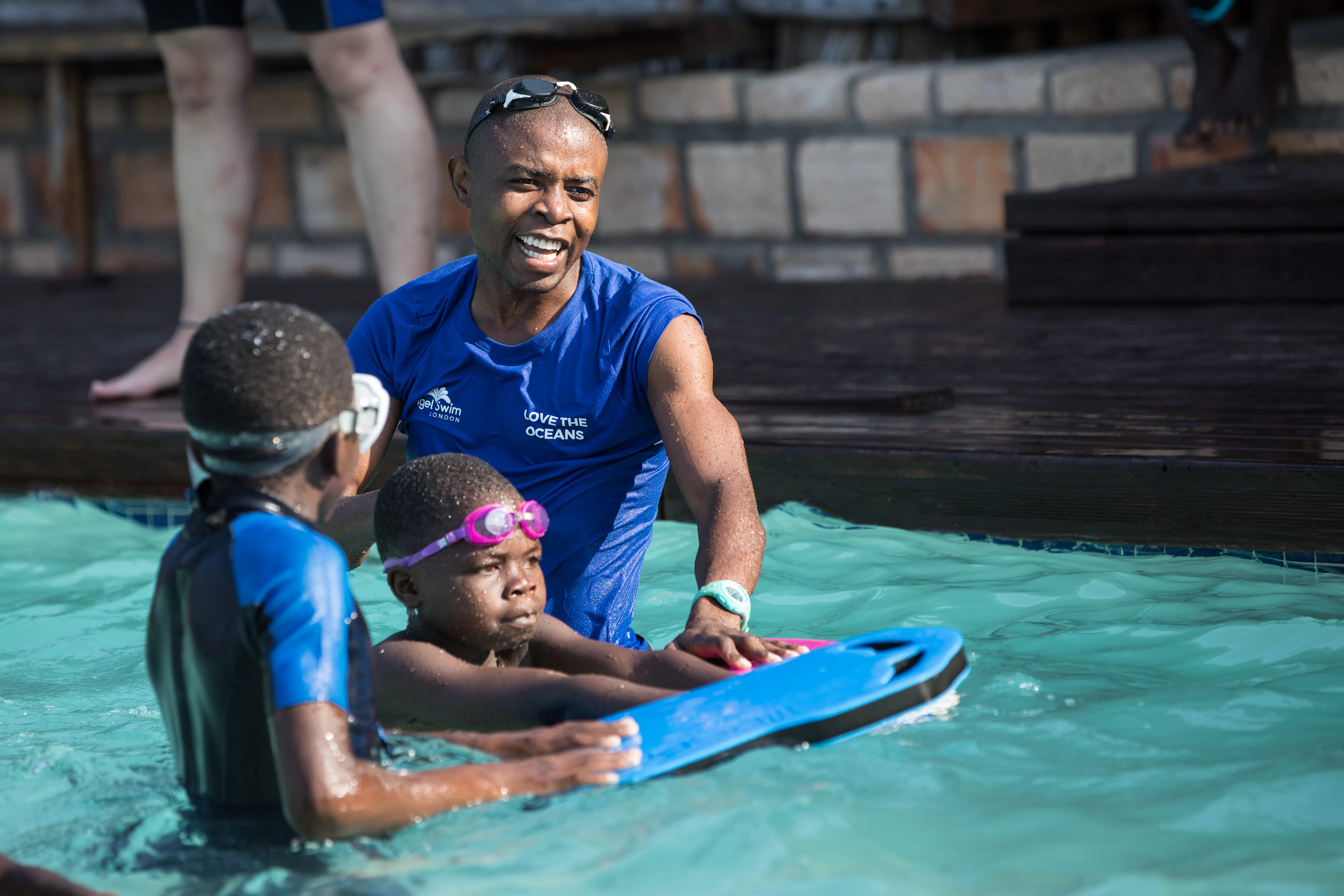
Learning to swim three years ago was a pivotal moment in Pascoal’s journey. It has enabled him to forge a new connection with the ocean, not as a place of fear, but as a life-giving place of opportunity, and wonder. Over the last six years, and as the first Mozambique citizen to qualify as an STA Swimming Teacher, Pascoal has worked with Love The Oceans to deliver a program that has had a profound effect on how his community relates to the sea.
In just three years, 800 children and adults in Pascoal’s community have learned how to swim.
Love The Oceans is committed to a holistic, community-led approach to ocean conservation; enabling and empowering people to solve the critical conservation and sustainability problems that are negatively impacting their own livelihoods. Education is central to their approach.
Pascoal says,
Pascoal has witnessed first-hand how swimming not only keeps his friends and neighbors safe when they go out fishing, but that it can also act as a foundation for gaining the skills and agency they will need to start developing their own ocean-based eco-tourism businesses.
How Kayaks Create Livelihoods and Protect the Ocean
Pascoal continues to teach his community how to swim, but the pioneering project that is currently taking up his energy and time is the new kayak-powered Sustainable Fishing Program, launched by Love The Oceans in response to the pressures of the Covid-19 pandemic.
As the pandemic brought the world to its knees, any income the residents of Jangamo Bay were able to sustain from tourism vanished. Many in Pascoal’s community struggled to put food on the table.
Out of necessity, more and more fishermen turned to unsustainable gill net fishing and spearfishing close to the shore, which has long spelled devastation for the region’s vital shark populations and put too much pressure on the community’s reefs near the shore.
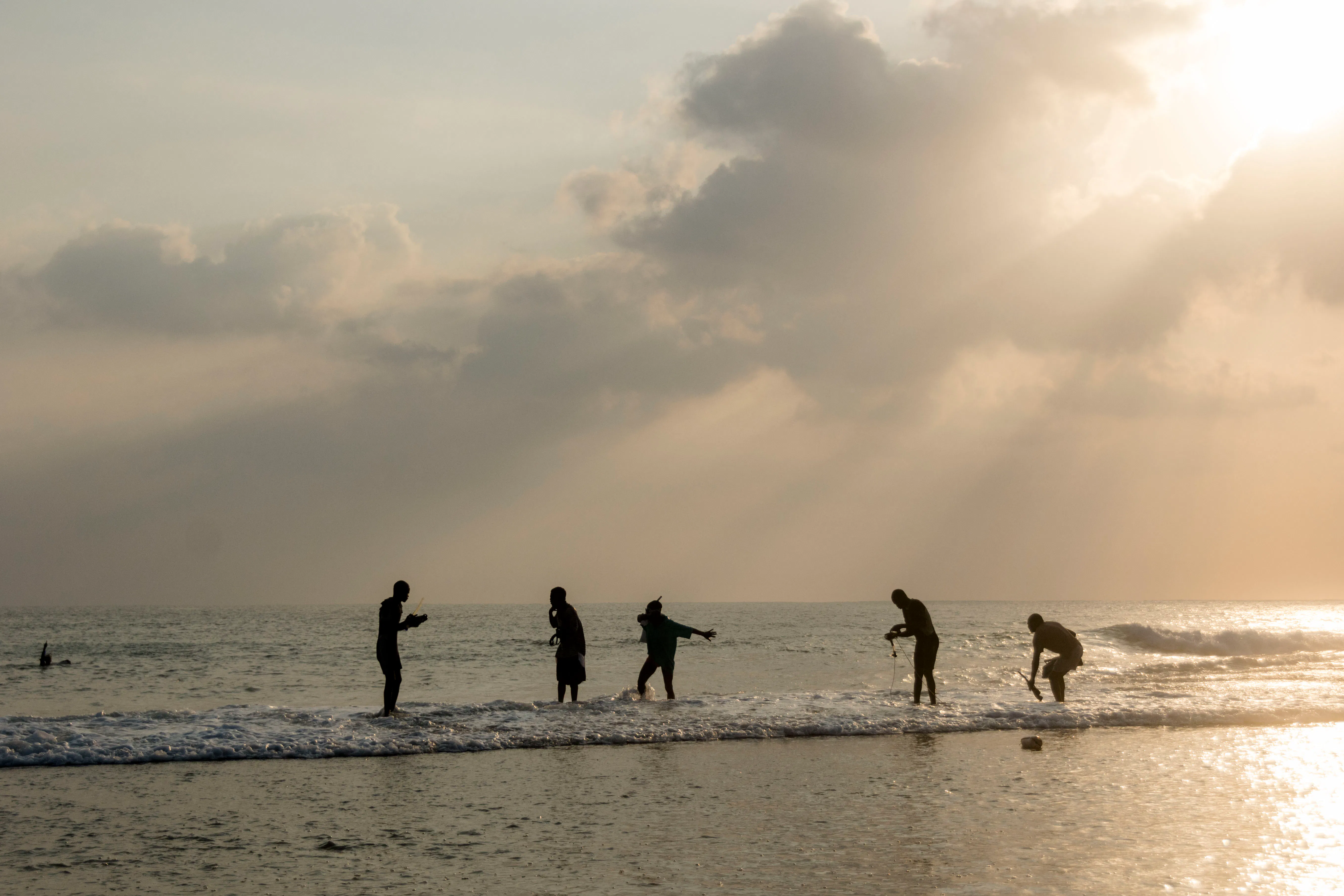
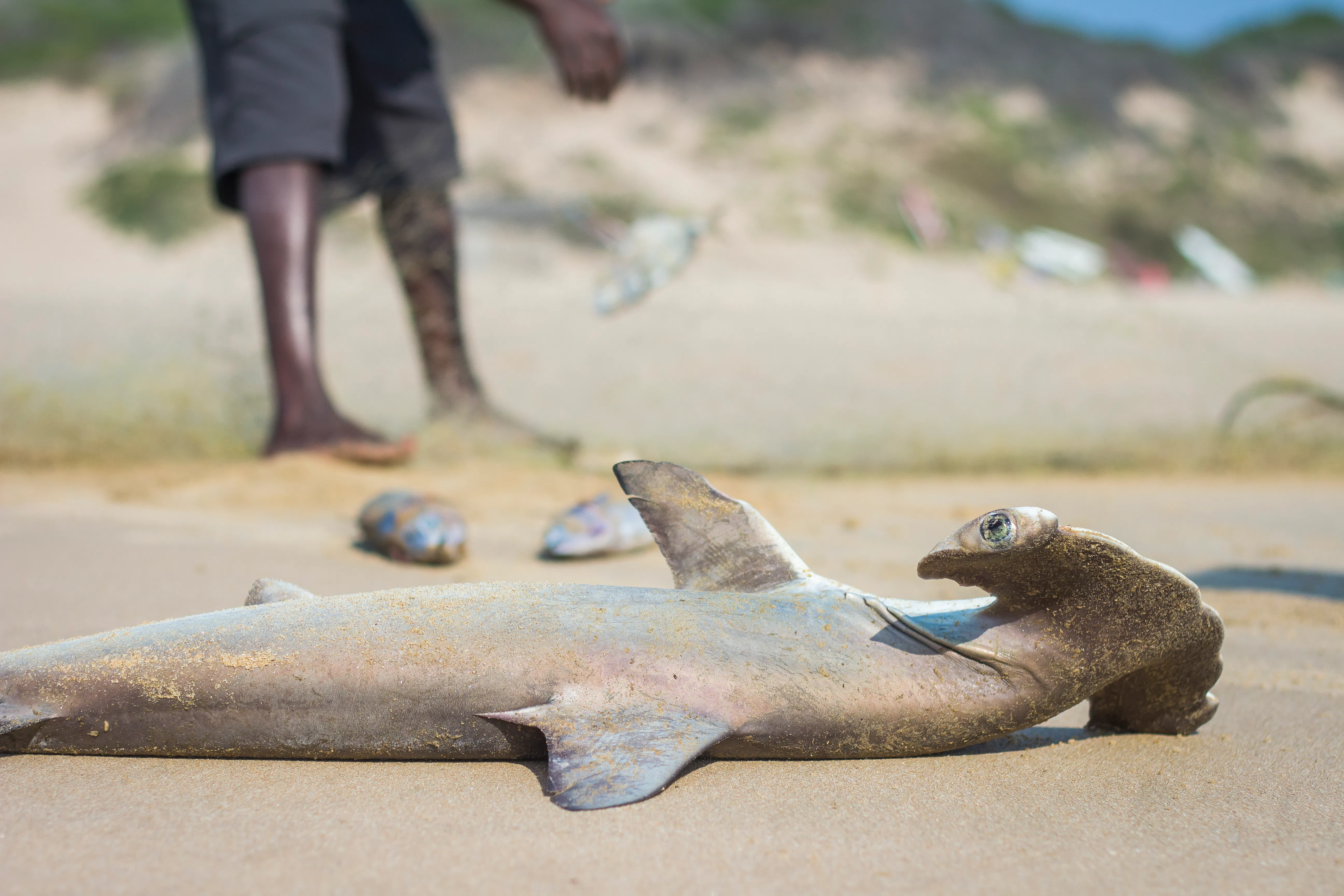
Years of scientific monitoring by the team at Love The Oceans has shown that here in Jangamo Bay, as on reefs around the world, losing the sharks and big predators destabilizes the balance in local reef ecosystems and depletes the region’s biodiversity over time in a negative spiral.
At school, Pascoal likes to teach this vital lesson to the children by dividing them up into groups. “This group is the sharks,” he says, “This group is the big fish, this group is the little fish, and this group is the fishermen”.
Pascoal explains that when the fishermen use gill nets, which target sharks and result in high numbers of accidental by-catch, it unbalances the ecosystem. With the children who are the sharks “gone,” they learn that are not enough predators keeping the numbers of big fish down, which in turn has a knock-on effect on the other groups.

Ultimately, this type of unsustainable fishing is a grave threat to the long-term health of the very fishery the community depends on.
The community needed a new solution.
One that worked for them and for nature. Along with Love The Oceans, Pascoal and the fishermen came up with a plan.
Enter the kayaks.
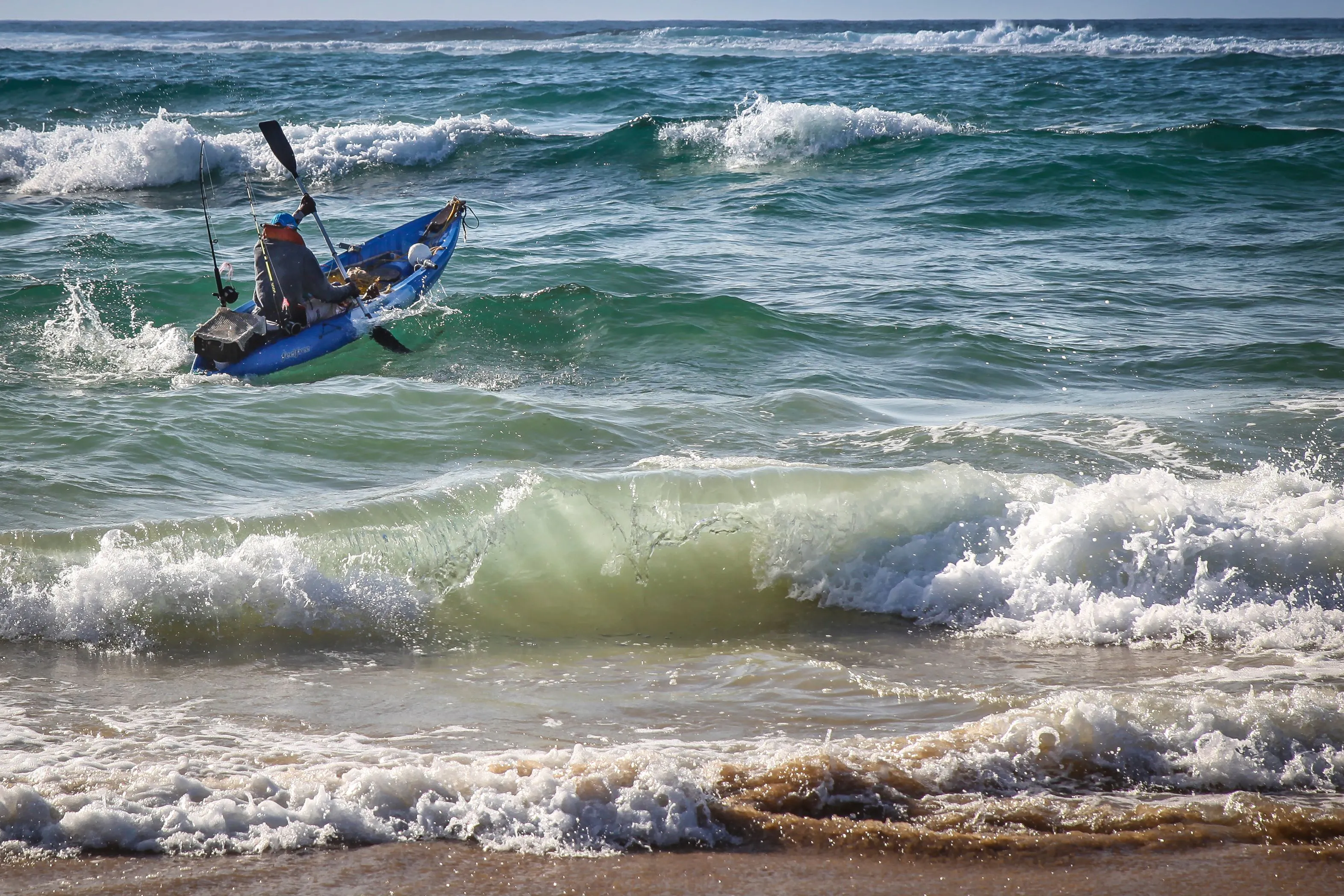
Fully equipped with life jackets, communication devices, and line-and-pole fishing equipment, these kayaks are enabling the fishermen of Guinjata to expand their range and harvest sustainably.
The ability to safely head out into deeper waters by boat is critical. With a steep shelf, strong surface currents, and often adverse weather conditions most fishermen in Pascoal’s community previously limited to gill netting and spearfishing on the shallow, local reefs.
Instead, pole-and-line fishing from the kayaks enables selective fishing that targets the bigger piscivore fish—like tuna and barracuda—which can both help rebalance the ecosystem and allow the fishermen to increase the value of their catch.
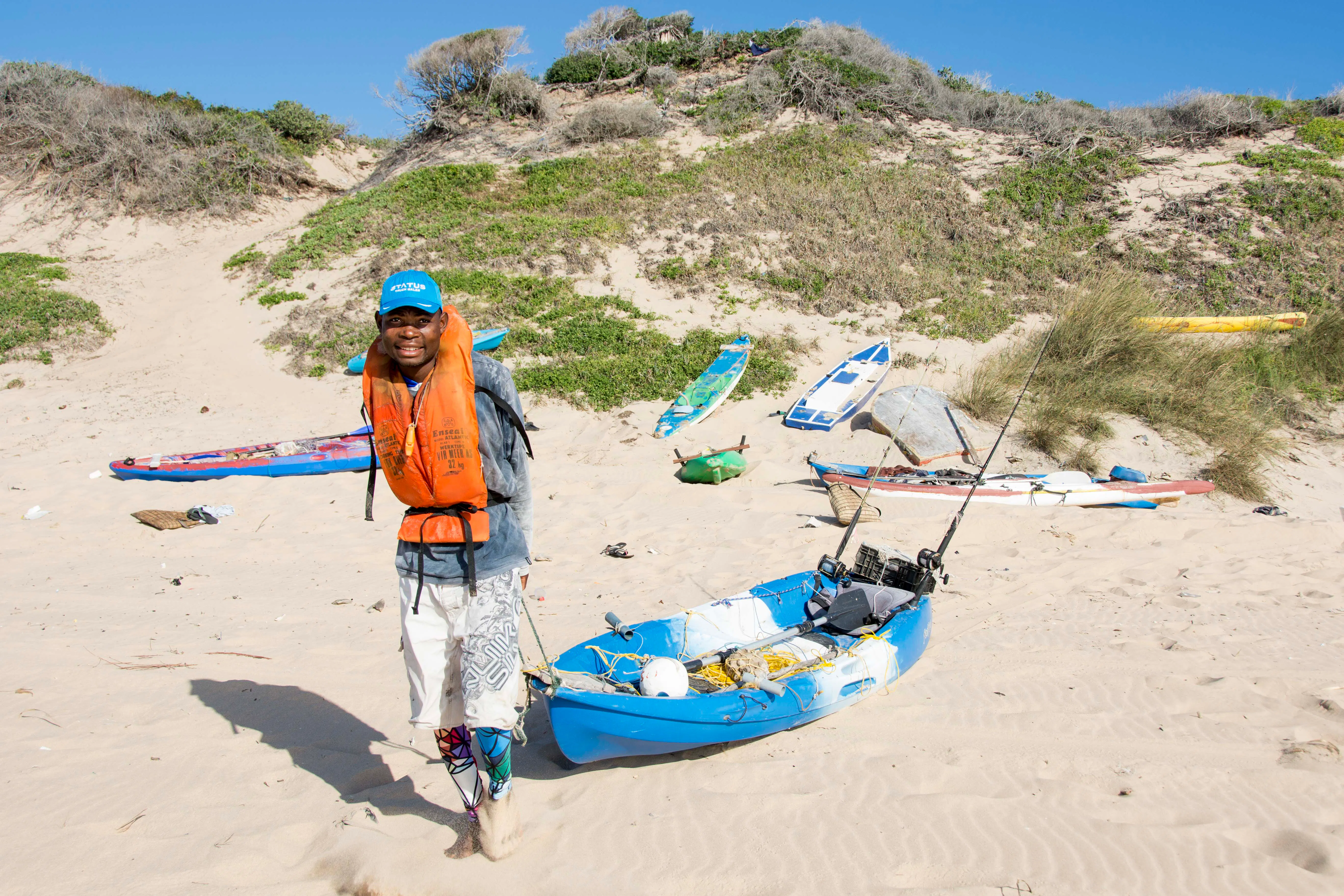
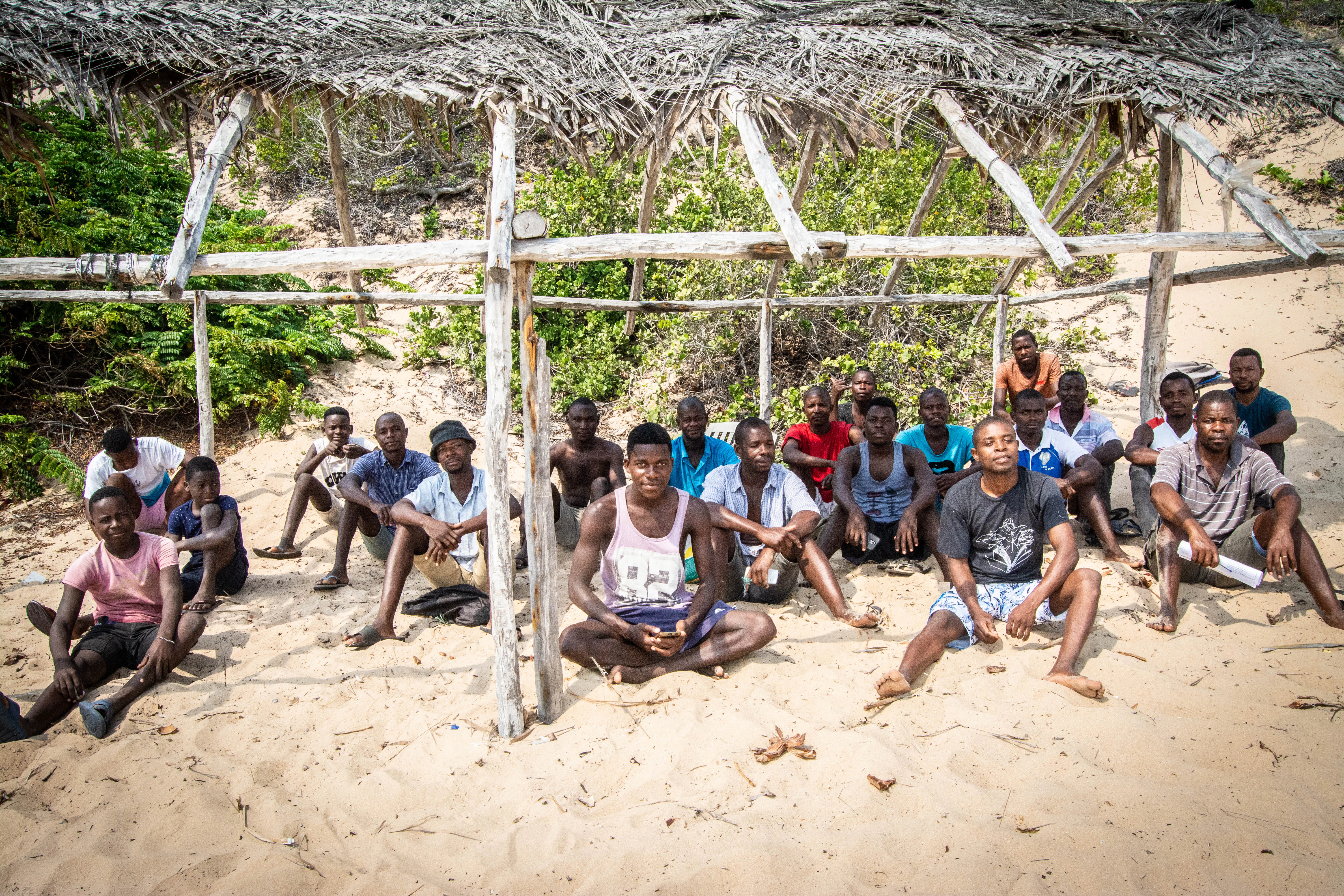
Pascoal knows that education is key to the long-term success of the program. Each fisherman also attends an in-depth workshop developed by Love The Oceans’ marine biologists and delivered by Pascoal, who is trained and experienced in sustainability. They also agree to give up their current method of fishing, if it is gill netting or spearfishing, understanding that this is vital for the long-term health of their fishery.
Last but not least, every catch the fishermen bring in is carefully logged by Pascoal, enabling the community to monitor the health of their ecosystem and learn more about how it’s changing over time.
A natural-born teacher, Pascoal believes that expanding his community’s own knowledge of how to care for and sustain their invaluable marine resources in the future is critical.
What’s next for Pascoal
This month, the support of The Tide is enabling the kayak-powered sustainable fishing program to be fully implemented in the village of Guinjata, but Pascoal and Love The Oceans aren’t stopping there.
Next, their attention will turn to the two neighboring villages in Jangamo Bay—Paindane Bay and Coconut Bay—where they hope another fleet of kayaks will soon be slicing through the foaming breakers and heading out into deeper water, transforming the lives of fishermen and their families, while also protecting the marine ecosystem they rely on.
And after this, well, their sights will turn further up the coast.
As an affordable, locally-run strategy, kayak-powered fishing and monitoring is a holistic approach to conservation that could be replicated up and down the coastline of Mozambique and beyond.
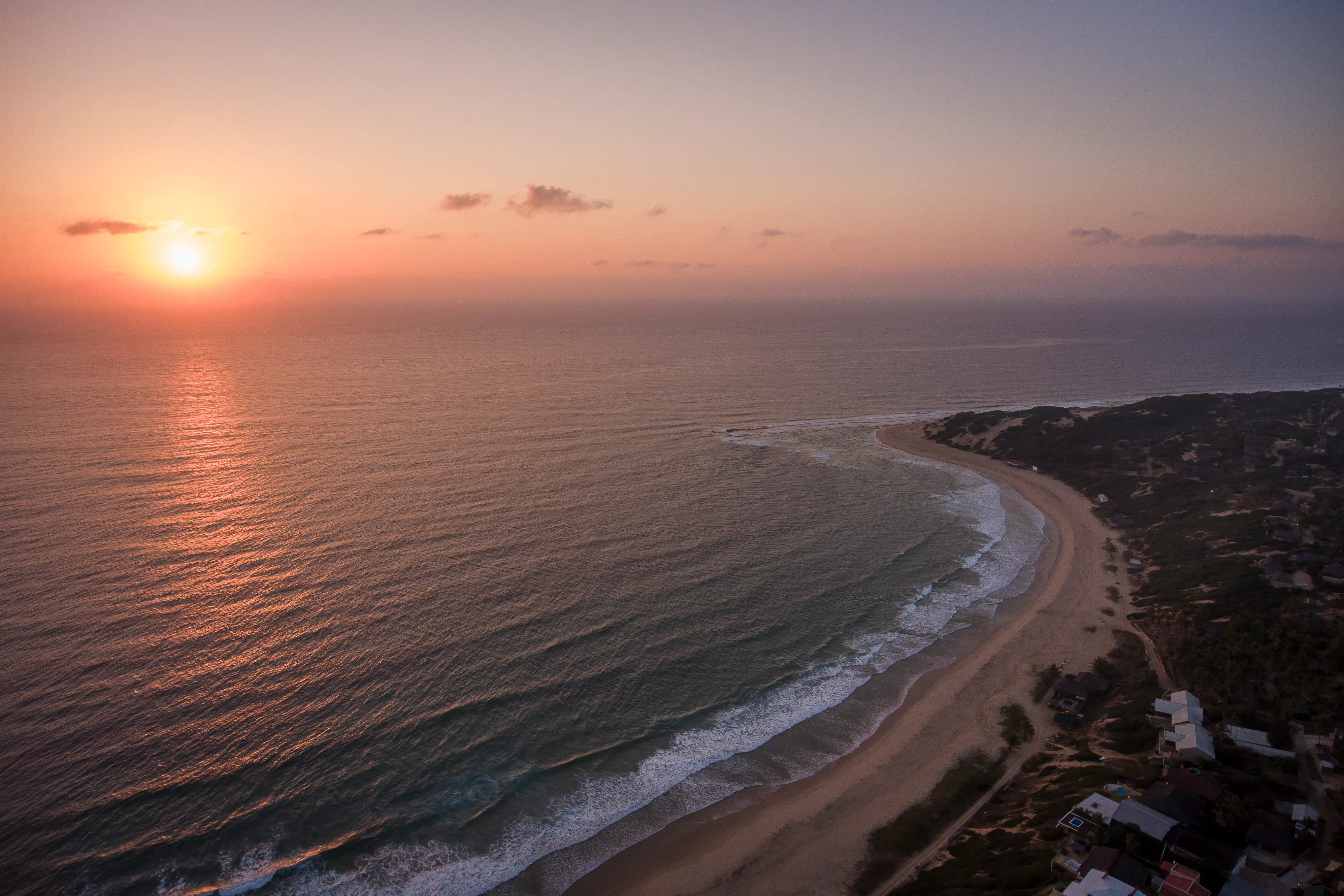
In a region where locals report unemployment at around 70 percent, and the Covid-19 pandemic has brought significant hardship, Pascoal is playing a leading role in re-shaping the trajectory of his community’s future, catalyzing opportunity through eco-tourism for his people, and protecting the vibrant slice of ocean that sustains their livelihoods.
Marine biologist Francesca Trotman, the organization’s founder, tells us, “Pascoal has been with Love The Oceans since the beginning. Pascoal is Love The Oceans.” His dedication and passion for the ocean is catching.
Pascoal says:
Today, Pascoal is pursuing his dream to learn to scuba dive as part of his ongoing conservation work—getting to know the ocean from the inside—while teaching the next generation to care for the sea and working to transition his community to sustainable fishing. His determination and vision are making waves of change for generations to come.
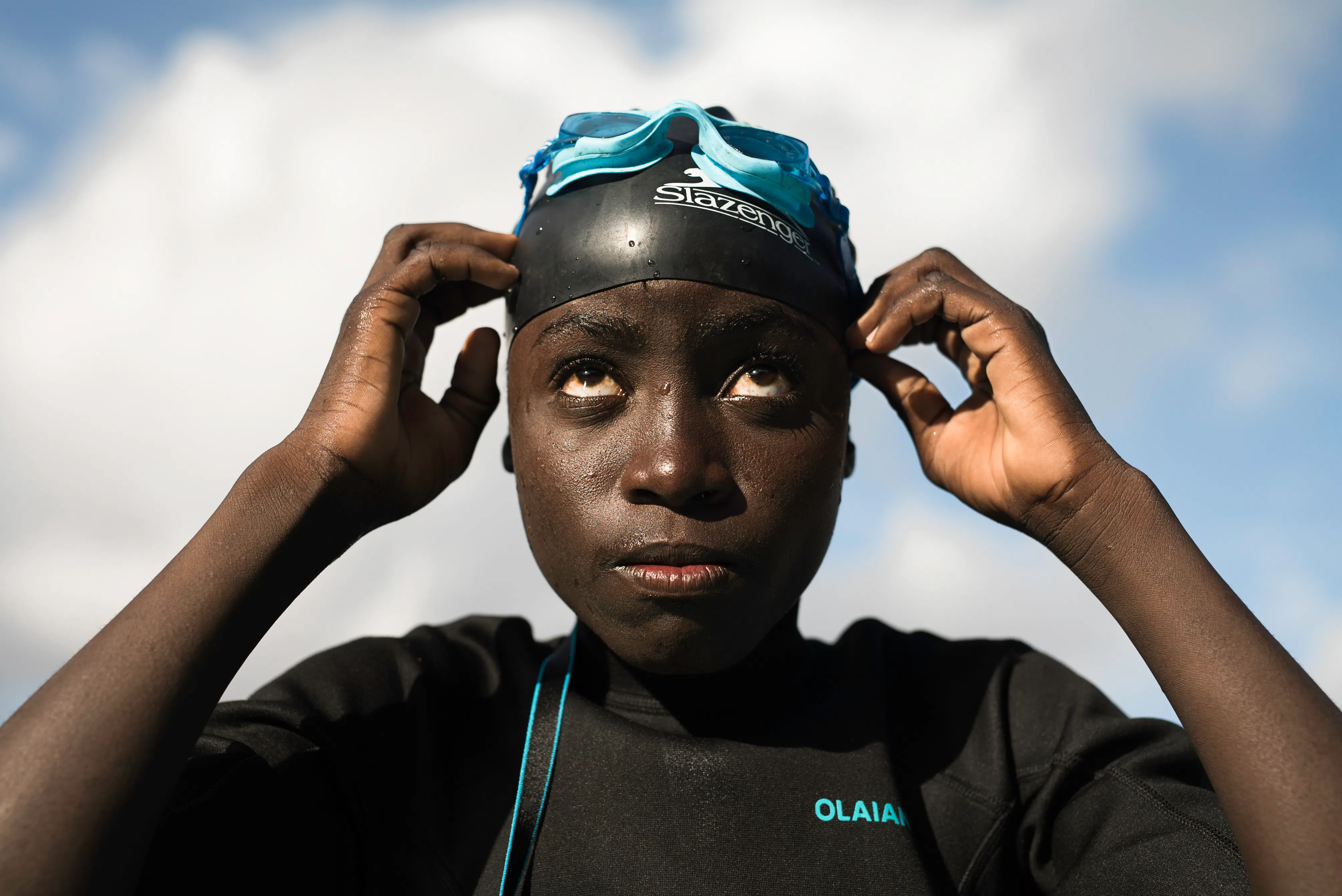
Watch the short film
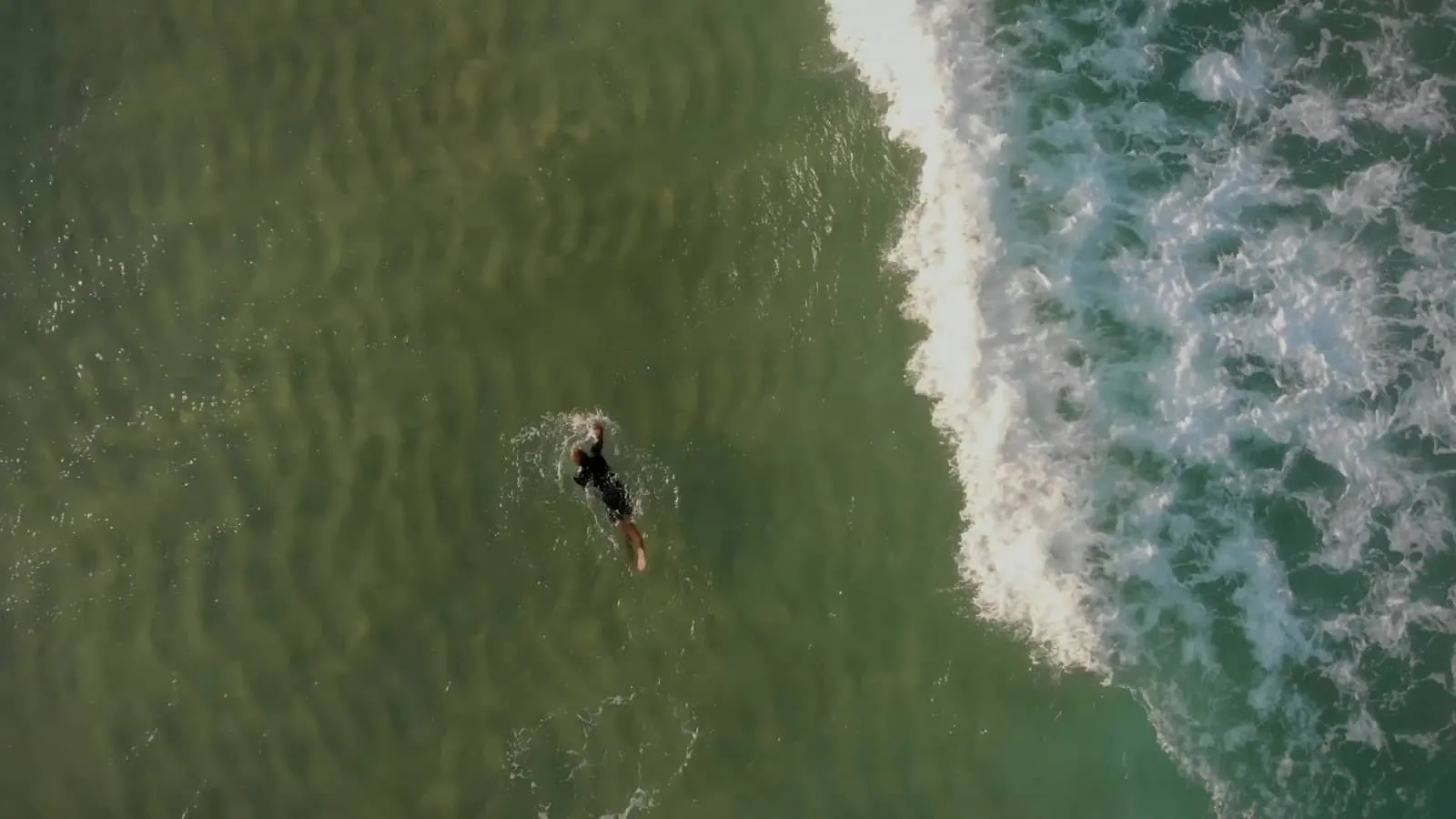
Read more about The Tide’s support for Pascoal and Love The Oceans: the positive feedback loop from even one kayak is incredible.
Every month The Tide community supports an ocean project that is good for people and for nature. Join Pascoal, Love The Oceans, and some of the world’s most determined changemakers to help rebuild ocean life, tackle the climate crisis, and shape a better future.