
Photo of the day
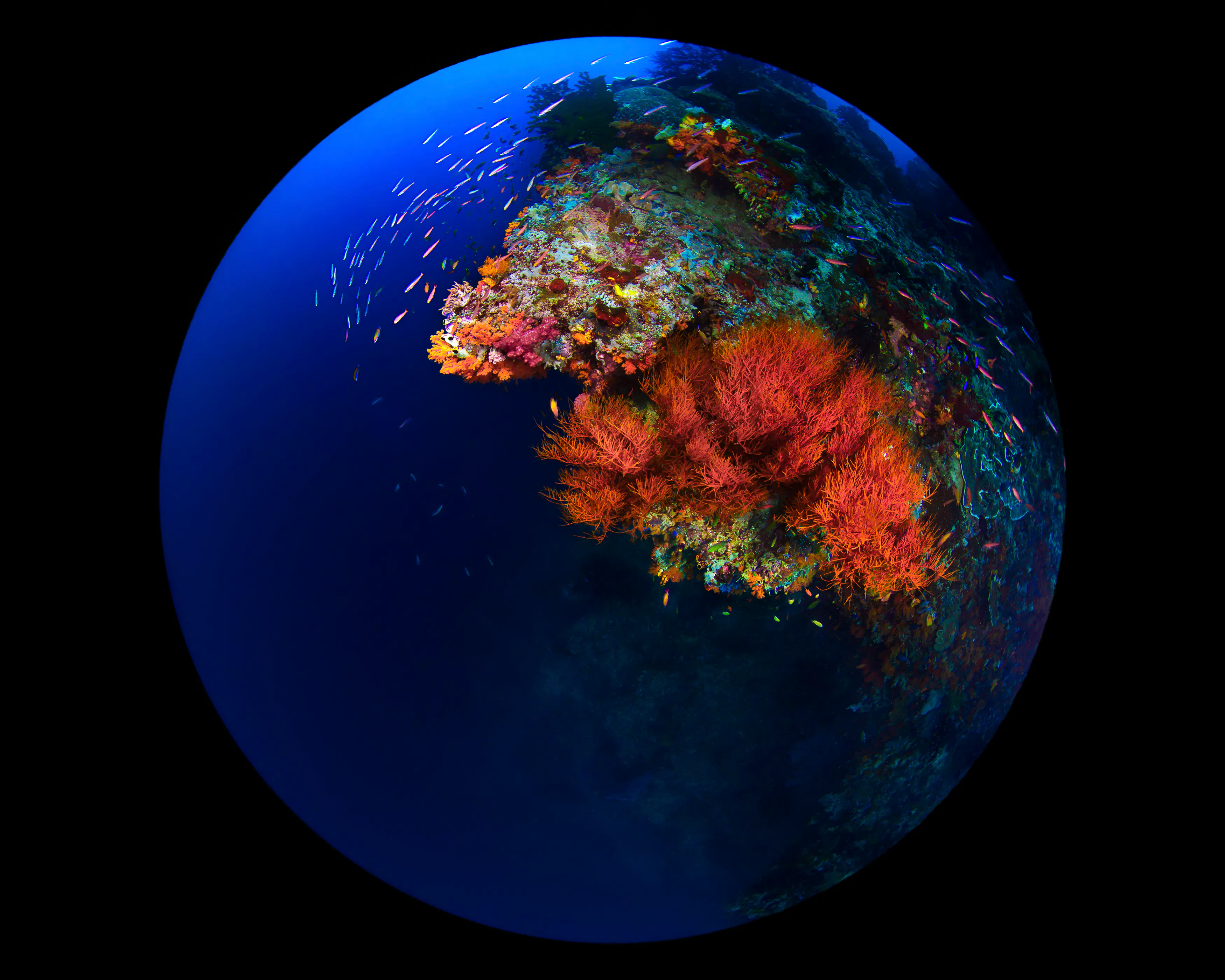
Today’s photo looks at coral reefs from a different angle — literally, through a fisheye lens! One of the things that’s most lovable about reefs is their bright colors. Not all corals are colorful, and many are dull greens or browns. But what does make some reefs a multicolored feast for the eyes? Corals are animals, and their skeleton is ghostly white by itself. In fact, it is the tiny plant cells (algae) that live on corals — called “zooxanthellae” — that give reefs their mix of colors. With the help of chlorophyll, the zooxanthellae turn sunlight into sugar through photosynthesis. As in terrestrial plants, the chlorophyll makes the algae appear green-brown. All healthy corals have this color, but the brighter ones also produce different pigments, and that’s where the magic happens. These corals produce non-fluorescent “reflective” pigments referred to as “chromoproteins,” which can show up as red, purple, blue, mauve, or other colors. About two dozen chromoproteins are found in colorful corals! In addition, they produce more than 85 fluorescent pigments — proteins that absorb light of one color and emit light of a different color, typically cyan, green, yellow, or red, which is what we see. This is how we end up with a rainbow of coral colors 🌈
Beth Watson / Ocean Image Bank