
Explainer
Kelp
Seaweed Splendor
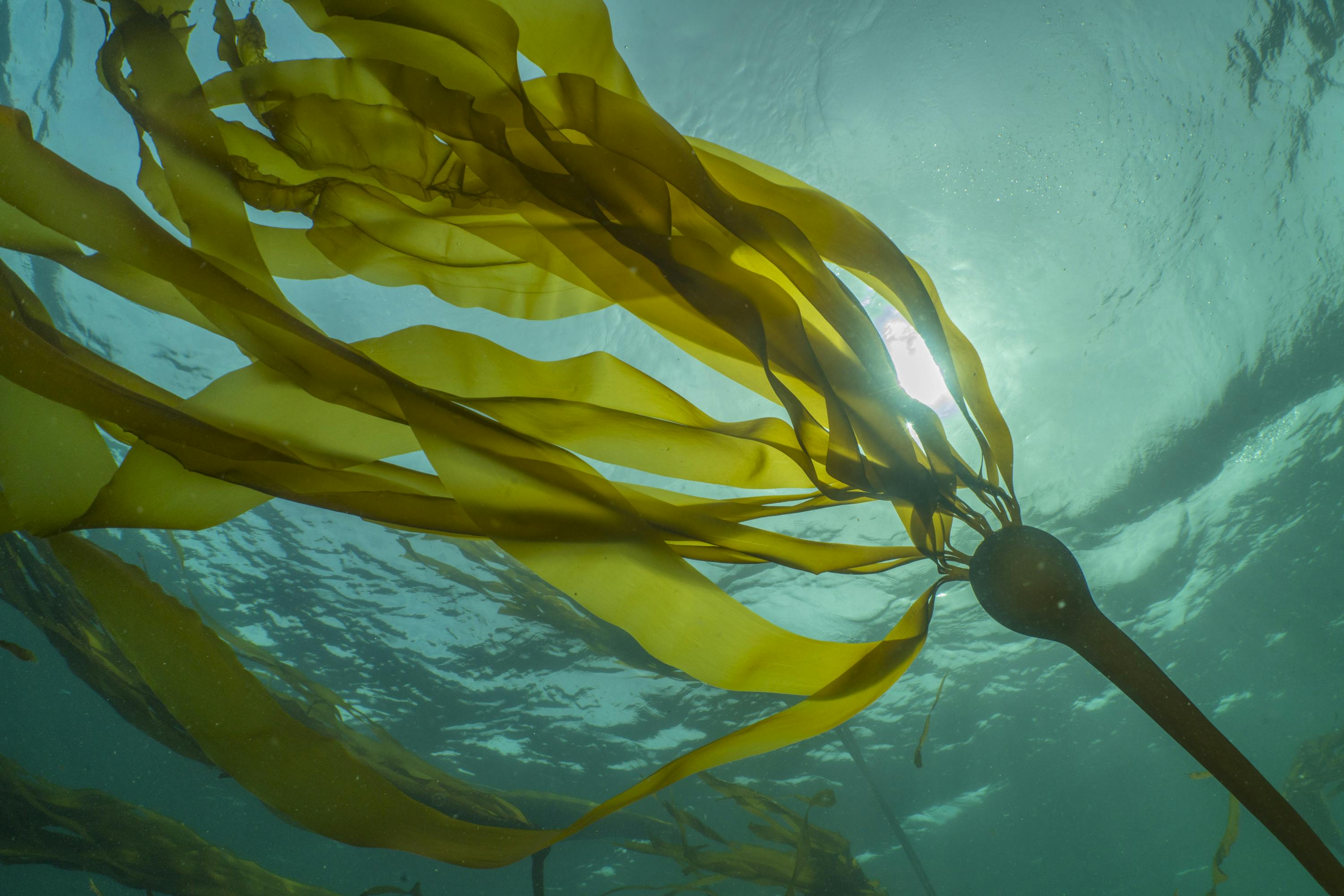
Breaking loose from rocky shorelines and floating out to sea, kelp carries carbon that ultimately sinks to the ocean floor.
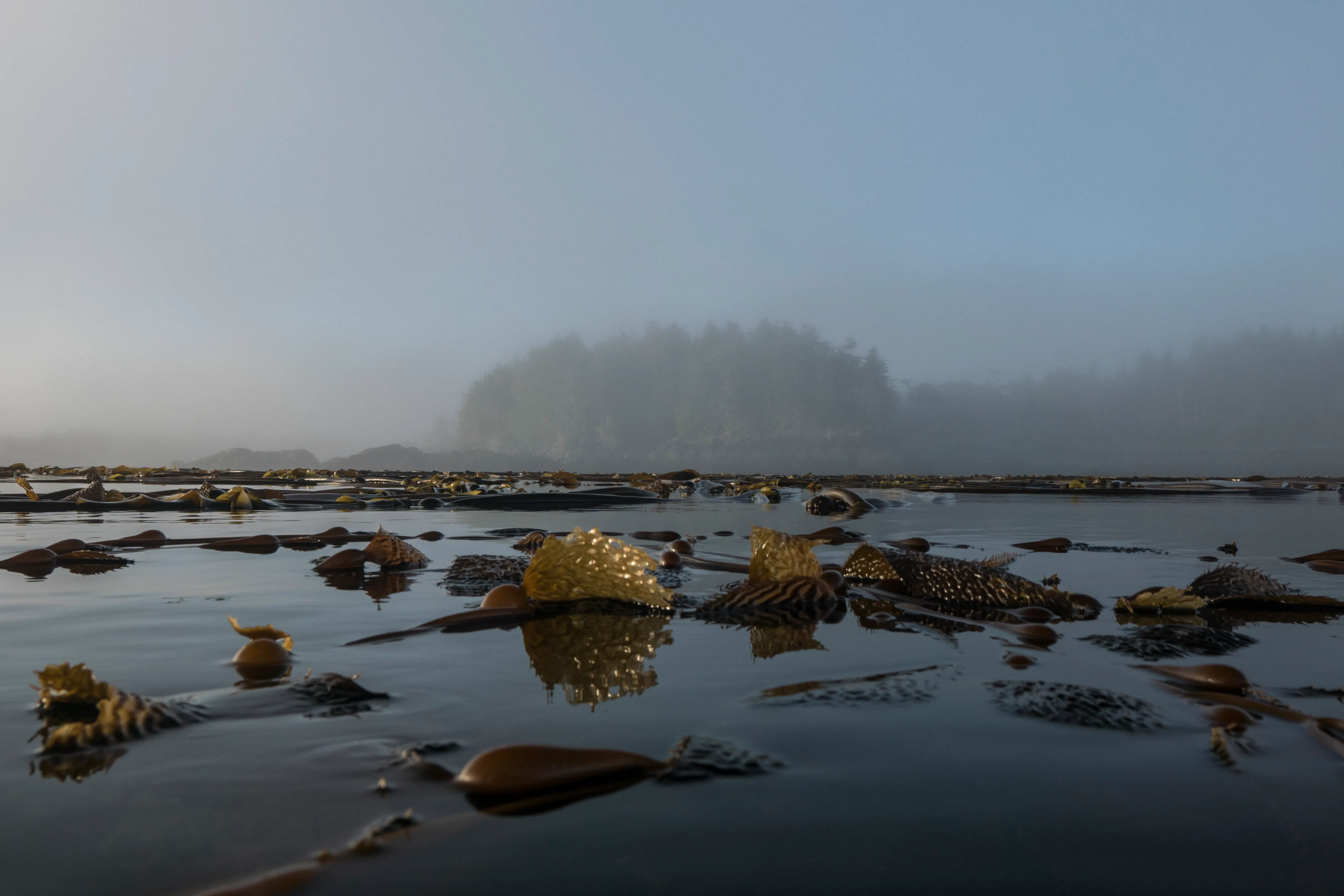
That carbon can remain deep underwater for millions of years, and in fact, kelp locks away around 175 million tons of carbon every year, making it a crucial carbon-capture tool in the race to solve climate change.
A type of seaweed, kelp is found in dense underwater forests along one-quarter of coastlines globally. Kelp can grow up to two feet per day, its fronds drifting ever closer to the surface while root-like holdfasts remain anchored to rocky areas below.
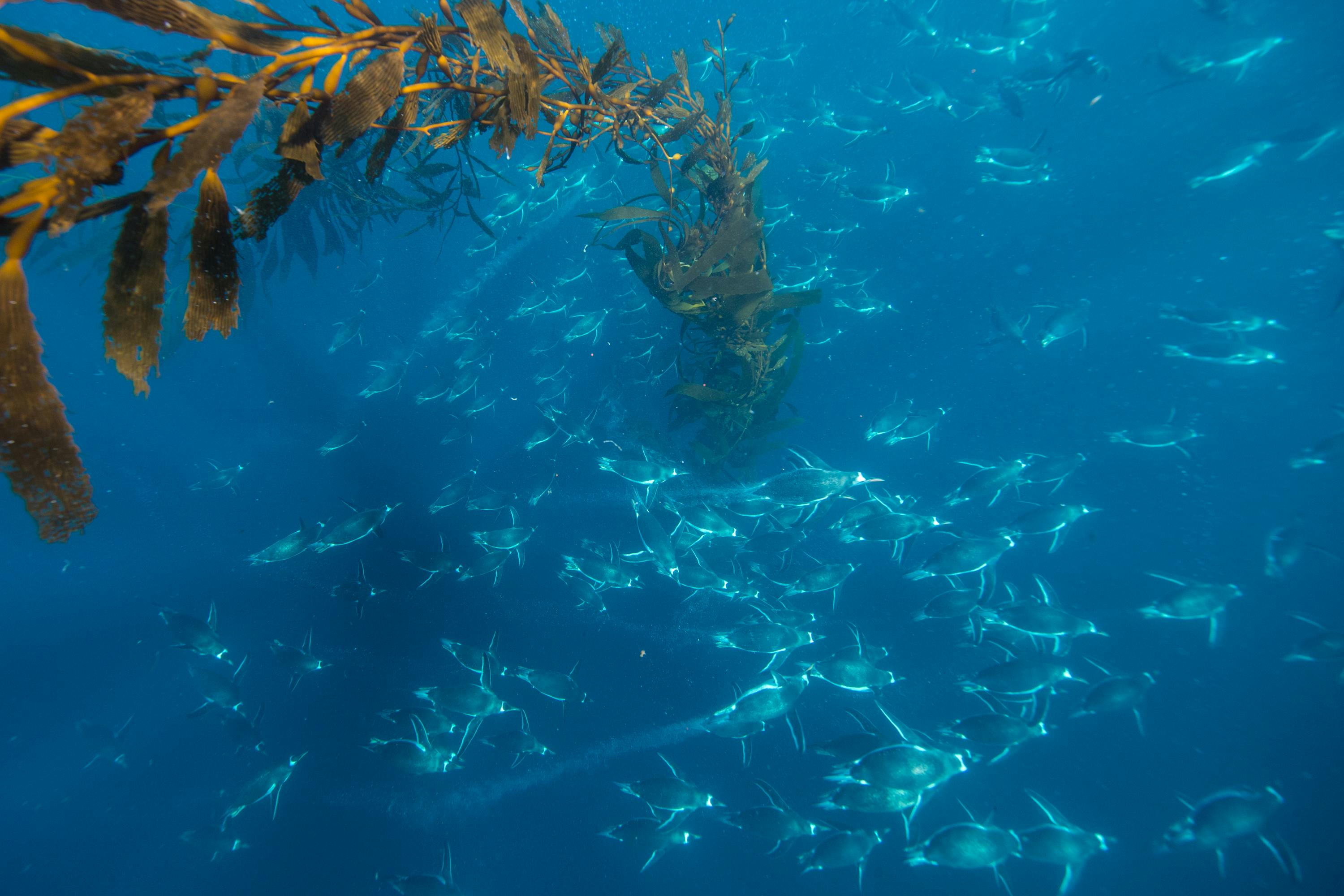
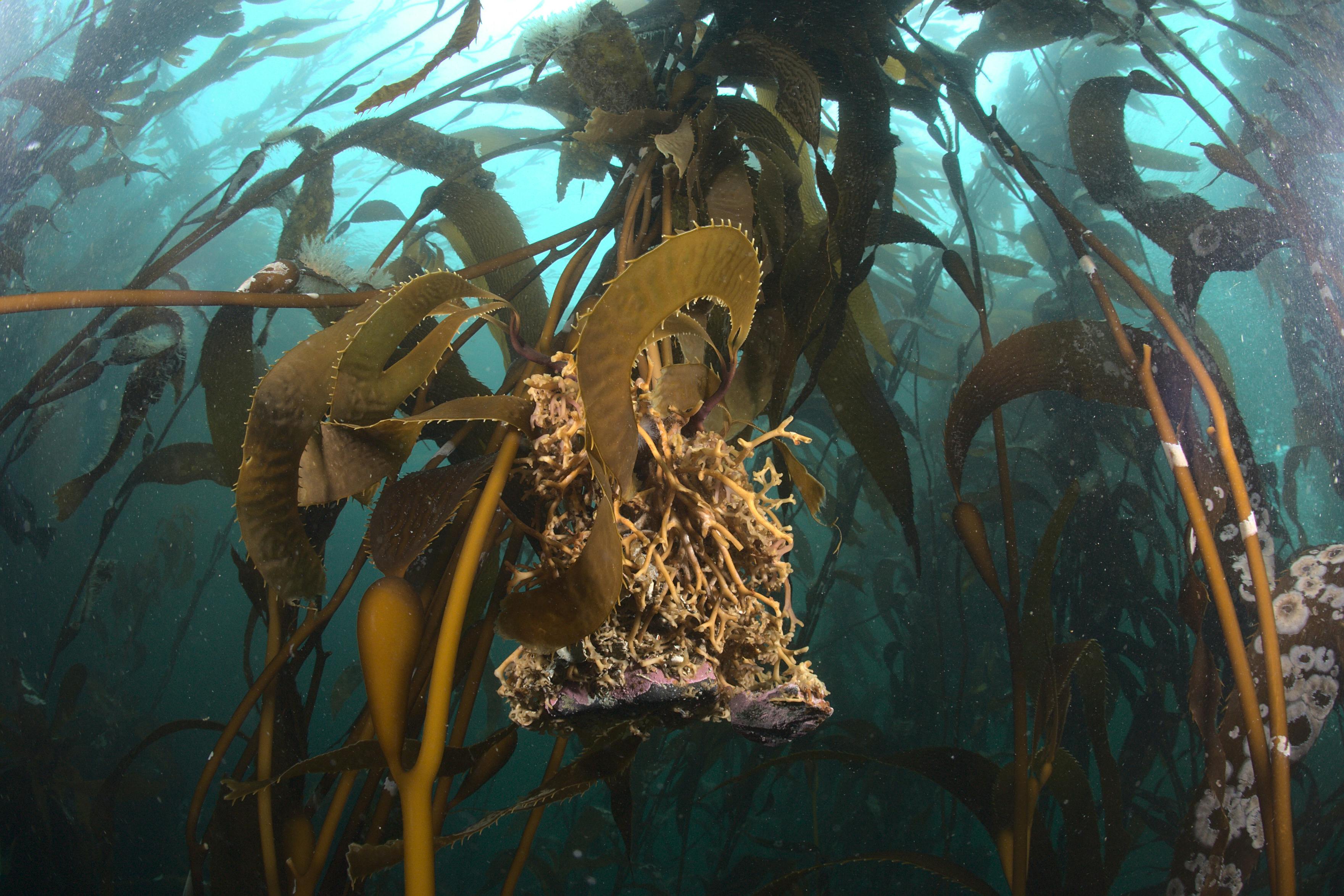
Kelp forests calm ocean currents and slow wave action, curbing erosion along shorelines struggling to withstand sea level rise.
Coastal Indigenous communities have long cultivated nutrient-rich seaweed, which can be farmed without the need for land, fertilizer, or freshwater. And by 2050, new kelp farms could absorb the annual CO2 emissions of 52 million cars while simultaneously filtering out nitrogen and phosphorus contributing to ocean acidification.
But 38 percent of kelp forests are diminishing because of ocean warming, which can cause them to absorb three times less carbon.
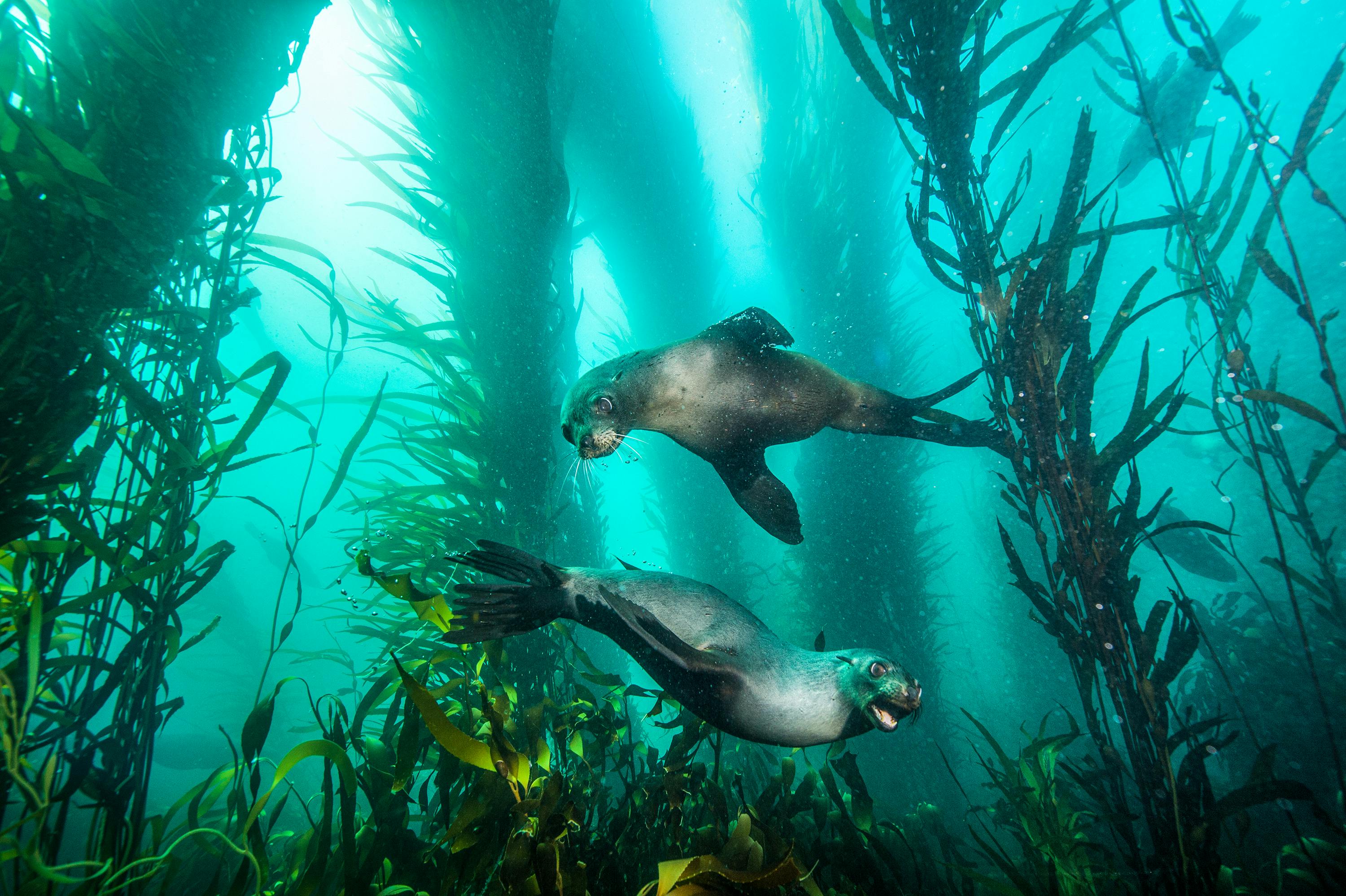
At least 800 species, including numerous fish, young gray whales, and fur seals, depend on kelp for shelter and food. To save them and overcome the climate crisis, we must take action to protect kelp.
Sources
Pew: 5 Reasons to Protect Kelp, the West Coast's Powerhouse Marine Algae
PHYS.org: Role of kelp forests in mitigating climate change under threat
PNAS: Global patterns of kelp forest change over the past half-century
BioScience: Rise of Turfs: A New Battlefront for Globally Declining Kelp Forests
The Guardian: ‘It’s a miracle crop’: the pioneers pushing the powers of seaweed
The New York Times: The Climate-Friendly Vegetable You Ought to Eat